Types of Domain Extensions: gTLD vs ccTLD vs New TLDs
Print- 0
Types of Domain Extensions: gTLD vs ccTLD vs New TLDs
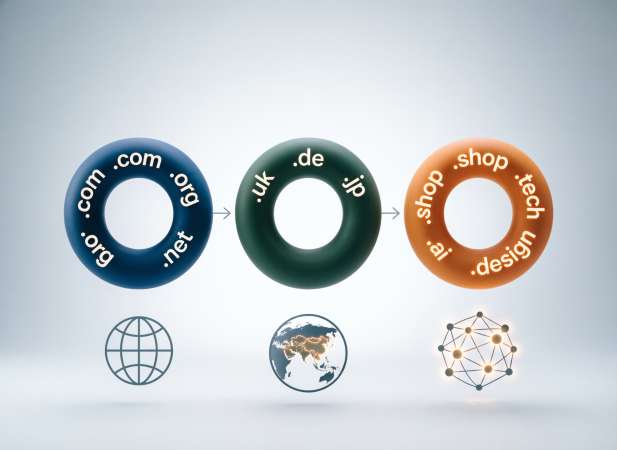
Choosing the right domain extension is more than just finding an available name—it's a strategic decision that shapes how visitors perceive your website and how search engines understand your purpose. With hundreds of domain extensions available today, the landscape has evolved far beyond the familiar .com and .net options. This guide breaks down the three main categories you'll encounter: generic Top-Level Domains (gTLDs) like .org and .biz, country code Top-Level Domains (ccTLDs) such as .uk and .ae, and the expanding universe of New TLDs including .shop, .tech, and .online. Understanding the differences between these extension types helps you select one that aligns with your brand identity, geographic focus, and long-term goals. Whether you're launching a local business, an international e-commerce store, or a specialized project, the right domain extension serves as your digital foundation. Let's explore what each category offers and how to make an informed choice for your next domain.
What Are Domain Extensions and Why Do They Matter?
A domain extension, formally known as a Top-Level Domain (TLD), is the suffix that appears at the end of a web address—everything that follows the final dot in a domain name. While seemingly a small component of your URL, this extension carries significant weight in how your website is categorized, perceived, and discovered online.
Domain extensions serve as the internet's classification system. They provide immediate context about a website's purpose, geographic origin, or organizational type. Search engines use these signals to understand your site's relevance to specific queries, while visitors often form first impressions based on the extension they see. A .gov domain signals government authority, a .edu indicates an educational institution, and a country-specific extension like .ae instantly communicates regional relevance to audiences in the United Arab Emirates.
Beyond categorization, your choice of domain extension impacts availability, branding flexibility, and technical considerations. With premium gTLDs like .com becoming increasingly scarce, alternative extensions open opportunities for memorable, brand-aligned domain names that might otherwise be unavailable. Additionally, certain extensions come with specific registration requirements, validation processes, or technical configurations that affect how your domain functions within the DNS infrastructure.
Understanding the role of domain extensions is fundamental to making an informed decision that supports your online objectives. The right extension enhances credibility, reinforces your target audience alignment, and lays the groundwork for effective domain management throughout your website's lifecycle. As you explore the different categories of TLDs available today, keep in mind that this choice extends beyond aesthetics—it's a strategic element of your digital identity.
Understanding Generic Top-Level Domains (gTLDs)
Generic Top-Level Domains (gTLDs) form the original backbone of the global domain namespace—extensions not tied to any specific country or region. Established under ICANN governance, legacy gTLDs like .com (commercial), .org (organization), .net (network), .info, and .biz were designed to categorize online entities by purpose rather than geography. These unsponsored extensions remain open for global registration with minimal eligibility barriers, making them universally accessible across jurisdictions.
Technically, gTLDs operate within a standardized DNS framework supported by root servers worldwide, ensuring consistent resolution and compatibility with email hosting, SSL/TLS certificate issuance, and DNS management protocols. Their infrastructure maturity contributes to exceptional stability and interoperability across web applications, content delivery networks, and security systems. While original intended uses have evolved—.com now hosts diverse entities beyond commerce—their entrenched recognition significantly influences user trust, memorability, and perceived legitimacy.
From a strategic perspective, legacy gTLDs offer predictable renewal policies, transparent WHOIS frameworks (where applicable), and broad acceptance across digital platforms. Understanding their operational scope provides essential context before evaluating newer domain categories. Their enduring relevance lies not in novelty, but in proven reliability within the internet's foundational architecture—a critical consideration when establishing a resilient digital identity.
Common Examples and Historical Context
The original generic Top-Level Domain framework emerged in 1985 with just seven extensions managed under the Internet Assigned Numbers Authority (IANA). These foundational gTLDs included .com for commercial entities, .org for non-profit organizations, .net for network infrastructure providers, .edu for accredited educational institutions, .gov for U.S. government agencies, .mil for military use, and .int for international treaty organizations. This structured taxonomy reflected the internet's early academic and institutional roots before its commercial expansion.
For decades, this limited set remained largely unchanged, with .com rapidly becoming the default choice for businesses worldwide. The late 1990s marked a pivotal shift as ICANN assumed oversight, introducing new unsponsored gTLDs like .info (2001) for informational resources and .biz (2001) as a commercial alternative. These additions responded to growing demand and .com namespace saturation, though legacy extensions retained dominant market share due to entrenched user familiarity and brand equity.
Understanding this evolution clarifies why certain gTLDs carry implicit authority—.edu domains undergo strict eligibility verification, while .gov remains restricted to verified government entities. This historical context also explains varying registration policies, technical requirements, and trust signals embedded within each extension's operational framework. The maturity of these legacy gTLDs has established robust registry systems, standardized dispute resolution mechanisms (UDRP), and predictable lifecycle management protocols that continue to influence domain industry standards today.
Ideal Use Cases for gTLDs
Generic Top-Level Domains serve distinct purposes based on their historical designations and contemporary adoption patterns. The .com extension remains the universal standard for commercial enterprises, e-commerce platforms, and businesses targeting global audiences—its widespread recognition minimizes user friction during direct navigation and brand recall. Non-profit organizations, charities, and community-driven initiatives often select .org to signal their mission-driven orientation and establish immediate credibility with stakeholders seeking transparent, non-commercial entities.
Technical infrastructure providers, internet service companies, and network-focused services align naturally with .net—originally designated for network operations, it continues to convey technical authority. Informational portals, knowledge bases, documentation hubs, and educational resources benefit from .info, which explicitly communicates content-centric purpose to visitors. For small-to-medium businesses unable to secure their preferred .com domain, .biz offers a legitimate commercial alternative with clear business intent signaling.
Specialized gTLDs serve niche applications: .name for personal branding and portfolio sites, .pro for licensed professionals (attorneys, physicians, accountants) requiring verified credentials, and .mobi for mobile-optimized experiences. When selecting a gTLD, consider your audience's familiarity, industry conventions, and whether the extension reinforces your website's primary function. Legacy gTLDs provide predictable DNS behavior, broad email client compatibility, and established trust metrics—critical factors for mission-critical deployments where reliability outweighs novelty.
Country Code Top-Level Domains (ccTLDs) Explained
Country Code Top-Level Domains (ccTLDs) are two-letter domain extensions assigned to specific nations, territories, or geographic regions under the ISO 3166-1 alpha-2 standard. Examples include .uk for the United Kingdom, .de for Germany, .ae for the United Arab Emirates, and .sa for Saudi Arabia. Unlike generic TLDs, ccTLDs operate under national or regional registry authorities that establish localized policies governing registration, renewal, and compliance requirements.
Technically, ccTLDs function within the same DNS hierarchy as gTLDs but often incorporate geographic targeting signals that search engines use to determine regional relevance. Google and other search providers recognize ccTLDs as strong indicators of intended audience location, which can enhance visibility in local search results without requiring additional geotargeting configurations in webmaster tools. This inherent geographic association makes ccTLDs particularly valuable for businesses operating within specific markets or targeting region-specific customer bases.
Registration policies for ccTLDs vary significantly by jurisdiction. Some registries impose strict eligibility criteria requiring local presence, business registration, or citizenship verification, while others maintain open registration similar to gTLDs. These regulatory frameworks impact domain lifecycle management, transfer procedures, and dispute resolution mechanisms. Understanding these requirements is essential before committing to a ccTLD, as non-compliance can result in suspension or loss of domain rights. Despite these considerations, ccTLDs offer compelling advantages for establishing local credibility, reinforcing market presence, and optimizing regional discoverability.
How ccTLDs Signal Geographic Relevance
Country Code Top-Level Domains function as explicit geographic signals within the Domain Name System, providing both search engines and human visitors with immediate contextual understanding of a website's intended market. Search algorithms interpret ccTLDs as strong localization indicators—when a user in France searches for services, a .fr domain typically receives preferential ranking in regional search results compared to a generic .com without explicit geotargeting configurations.
This inherent geographic association streamlines international SEO strategy by eliminating the need for manual geotargeting settings in search console platforms. The ccTLD itself communicates regional intent to crawlers, influencing indexation patterns, localized snippet display, and market-specific ranking factors. For businesses operating across multiple territories, deploying separate ccTLDs for each region enables precise audience segmentation and localized content optimization without complex subdirectory or subdomain architectures.
From a user perspective, ccTLDs build immediate trust and cultural alignment. A visitor in Saudi Arabia encountering a .sa domain recognizes local presence, potentially increasing click-through rates and conversion likelihood. This psychological association extends to perceived legal compliance, customer support accessibility, and payment method familiarity. Additionally, ccTLDs often integrate with national internet governance frameworks, influencing domain validation requirements, data residency considerations, and regulatory compliance obligations that further reinforce geographic authenticity.
Registration Requirements and Local Presence Rules
Country Code Top-Level Domains operate under diverse regulatory frameworks established by national registry authorities, resulting in significant variation across jurisdictions. Some ccTLDs maintain open registration policies comparable to gTLDs—extensions like .co (Colombia) and .me (Montenegro) permit global registration without local presence verification, making them accessible for international branding despite their geographic designation.
Conversely, restricted ccTLDs enforce stringent eligibility criteria. The .ae domain for the United Arab Emirates typically requires a valid trade license or Emirates ID for registration, while .uk domains may necessitate a UK address for the registrant contact. Germany's .de extension, administered by DENIC, mandates accurate registrant data subject to verification, and certain countries like Nigeria (.ng) or India (.in) may require local administrative contacts or business entity documentation.
These requirements extend beyond initial registration to encompass renewal protocols, transfer authorization processes, and compliance audits. Registry operators may suspend domains failing to maintain valid local credentials or updated contact information. Technical implications include WHOIS display policies, DNSSEC implementation mandates, and registry-lock features designed to prevent unauthorized transfers. Before selecting a ccTLD, verify the specific documentation, residency prerequisites, and ongoing compliance obligations with the governing registry to ensure operational continuity and avoid unexpected domain suspension or loss of registration rights.
The Rise of New Generic Top-Level Domains (New gTLDs)
The domain name landscape underwent its most significant transformation in 2012 when ICANN launched the New gTLD Program, fundamentally expanding the namespace beyond traditional extensions. This initiative introduced over 1,200 new generic Top-Level Domains to address namespace saturation, foster innovation, and provide descriptive alternatives to legacy options. The program categorized applicants into community-based, geographic, and generic brand applications, each subject to rigorous evaluation processes including string contention resolution and objection procedures.
New gTLDs encompass diverse categories: industry-specific extensions (.bank, .law, .health), lifestyle and interest domains (.music, .art, .sport), geographic identifiers (.nyc, .london, .tokyo), and brand-specific TLDs owned by corporations (.google, .apple, .bmw). Unlike legacy gTLDs managed by multiple registrars under shared registry agreements, many new gTLDs operate under single-entity registry models with customized policies governing registration eligibility, pricing structures, and security requirements.
Technical implementation introduced enhanced registry services including mandatory DNSSEC deployment for certain extensions, Rights Protection Mechanisms (RPMs) like Trademark Clearinghouse integration, and standardized sunrise periods for trademark holders. While adoption rates vary significantly across categories, these extensions have reshaped domain strategy considerations—offering precise brand alignment, reducing namespace competition, and enabling descriptive URL structures that communicate purpose before a visitor even lands on the page. Understanding their operational frameworks remains essential for informed domain portfolio planning.
From .shop to .tech: Purpose-Built Extensions
Purpose-built new gTLDs represent a paradigm shift in domain strategy—extensions engineered to communicate specific industry affiliation, service type, or functional intent directly within the URL structure. Industry-focused TLDs like .shop, .store, and .ecommerce provide immediate e-commerce context, while technology-oriented extensions such as .tech, .dev, .cloud, and .io signal technical specialization to developers, investors, and B2B audiences.
Professional service sectors benefit from extensions like .law, .accountant, .architect, and .consulting, which convey credential alignment and industry compliance expectations. Creative industries leverage .design, .studio, .photography, and .art to reinforce portfolio identity, while lifestyle and community domains like .fitness, .yoga, .wine, and .guru establish niche audience targeting without requiring descriptive subdomains or lengthy SLDs.
Many purpose-built gTLDs incorporate enhanced security frameworks by design. Extensions like .bank and .insurance mandate strict eligibility verification, SSL/TLS enforcement, and registry-level security policies that exceed standard domain requirements. Similarly, .app and .dev enforce HTTPS by default through HSTS preloading at the registry level, providing inherent security advantages for web applications and development environments.
From a branding perspective, these extensions enable concise, memorable domain names in saturated markets where traditional gTLDs may be unavailable. However, adoption considerations include variable user familiarity, potential email client compatibility nuances, and registry-specific policies governing renewal pricing, transfer restrictions, and dispute resolution mechanisms. Evaluating these factors ensures alignment between extension capabilities and long-term digital infrastructure objectives.
Brandability and Market Differentiation with New TLDs
New generic Top-Level Domains offer unprecedented opportunities for brand differentiation in increasingly crowded digital landscapes. Where traditional gTLDs often necessitate hyphenated, abbreviated, or modified domain names due to availability constraints, purpose-built extensions frequently provide access to concise, keyword-rich domains that align precisely with brand identity and service offerings.
From a branding perspective, extensions like .design, .studio, or .agency immediately communicate creative specialization, while .legal, .financial, or .medical convey professional sector alignment. This inherent descriptiveness reduces cognitive load for visitors, enhances memorability, and strengthens brand recall across marketing touchpoints. Startups and innovative ventures particularly benefit from extensions like .io, .ai, or .tech, which signal technological sophistication and attract industry-specific audiences.
Corporate entities leveraging brand TLDs (.brand) gain complete namespace control, enabling hierarchical domain architectures that reinforce organizational structure while preventing cybersquatting and brand dilution. Campaign-specific domains using extensions like .sale, .deals, or .promo create temporal distinction for marketing initiatives without cluttering primary domain assets.
However, strategic adoption requires balancing novelty against user familiarity. While new TLDs offer distinctive positioning, their effectiveness depends on target audience digital literacy, industry conventions, and competitive landscape analysis. Additionally, registry stability, long-term pricing predictability, and technical compatibility across email systems and third-party integrations warrant thorough evaluation before committing to a new gTLD for mission-critical digital properties.
Key Differences: gTLD vs ccTLD vs New TLDs
The three primary TLD categories serve distinct strategic purposes within domain architecture. Generic Top-Level Domains (gTLDs) like .com and .org operate globally without geographic restrictions, offering universal accessibility and entrenched user recognition. Country Code Top-Level Domains (ccTLDs) such as .uk or .ae signal explicit regional targeting, often requiring local presence verification and aligning with national registry policies. New generic TLDs (New gTLDs) provide descriptive, industry-specific alternatives like .tech, .shop, or .law, designed for precise brand alignment and namespace availability.
Registration frameworks vary significantly: legacy gTLDs maintain standardized, open policies with predictable renewal cycles; ccTLDs impose jurisdiction-specific eligibility criteria ranging from documentation requirements to residency mandates; New gTLDs feature diverse registry models with varying security protocols, sunrise periods, and Rights Protection Mechanisms. Search engine treatment also differs—ccTLDs provide inherent geographic targeting signals, while gTLDs and New gTLDs rely on content, backlink profiles, and explicit geotargeting configurations for regional visibility.
Trust perception correlates with extension maturity and audience familiarity. Established gTLDs benefit from decades of user conditioning, whereas New gTLDs may require additional credibility-building efforts despite their descriptive advantages. Technical considerations include DNSSEC support variations, email deliverability nuances, and registry-level security mandates that impact infrastructure planning. Selecting the appropriate category requires evaluating target audience expectations, competitive landscape dynamics, and long-term digital asset management objectives.
Trust, Recognition, and User Perception
User trust and domain extension perception operate on a spectrum influenced by familiarity, historical precedent, and contextual alignment. Legacy gTLDs like .com benefit from decades of conditioning—users instinctively associate them with established online presences, resulting in higher baseline trust and reduced cognitive friction during navigation. This entrenched recognition translates to stronger click-through rates, email deliverability confidence, and perceived legitimacy across diverse demographics.
Country Code Top-Level Domains generate localized trust signals. A .uk domain resonates with British audiences as authentic and regionally committed, while potentially appearing less familiar to international visitors. This geographic specificity builds credibility within target markets but may limit perceived scope for global expansion. Some ccTLDs have gained secondary associations—.io with technology startups, .co as a .com alternative—demonstrating how user perception can evolve beyond original geographic intent.
New gTLDs present a perceptual tradeoff: descriptive extensions like .law or .bank can enhance credibility within specialized contexts, but unfamiliar TLDs may trigger user hesitation or skepticism. Older demographics and less digitally-native audiences often exhibit greater caution toward non-traditional extensions. However, industry-specific TLDs can reinforce professional positioning when aligned with audience expectations and supported by robust website security indicators, SSL certificates, and transparent contact information.
Ultimately, trust extends beyond the extension itself to encompass website design quality, content authority, security implementation, and brand consistency. While TLD choice influences initial perception, sustained credibility depends on holistic digital presence management and user experience optimization.
SEO Implications Across Extension Types
Search engines treat domain extensions as classification signals rather than direct ranking factors, though their indirect impact on SEO performance varies significantly across TLD categories. Google has consistently clarified that new gTLDs receive equal algorithmic consideration to legacy extensions—ranking determinants remain content quality, backlink authority, technical performance, and user engagement metrics rather than TLD selection itself.
However, geographic targeting represents a critical distinction. Country Code Top-Level Domains provide inherent geotargeting signals that search engines interpret as strong indicators of regional relevance. A .de domain typically ranks more prominently in German search results without requiring manual geotargeting configurations in Search Console. Conversely, generic TLDs and New gTLDs rely on content language signals, server location, hreflang annotations, and explicit geotargeting settings to establish regional relevance.
User behavior metrics indirectly influence SEO outcomes across extension types. Familiar gTLDs like .com often generate higher click-through rates and lower bounce rates due to established trust patterns, potentially amplifying engagement signals that correlate with ranking improvements. New or unfamiliar TLDs may initially experience lower CTRs until brand recognition develops, though descriptive extensions can enhance relevance perception for niche queries.
From a technical SEO perspective, all TLD categories support identical optimization capabilities—canonicalization, structured data implementation, mobile responsiveness, and page speed optimization function uniformly regardless of extension. The strategic SEO consideration lies in aligning TLD selection with audience expectations, competitive landscape analysis, and long-term content strategy rather than pursuing perceived algorithmic advantages.
Pricing, Availability, and Registration Policies
Domain extension pricing follows distinct market dynamics across TLD categories. Legacy gTLDs like .com operate in highly competitive registrar markets with standardized wholesale pricing from registries like Verisign, resulting in consistent retail rates with frequent promotional introductory pricing. Premium .com domains, however, command significant aftermarket values based on brevity, keyword relevance, and historical traffic metrics.
Country Code Top-Level Domains exhibit substantial price variation governed by national registry policies. Some ccTLDs maintain subsidized pricing for local entities while charging premium rates for international registrants. Registration restrictions—such as local presence requirements, business license verification, or administrative contact mandates—directly impact accessibility and operational overhead for global businesses.
New gTLD pricing reflects diverse registry business models. While competitive extensions like .online or .site maintain aggressive pricing to drive adoption, specialized TLDs such as .bank or .law incorporate premium pricing tied to eligibility verification processes and enhanced security infrastructure. Early access periods and sunrise phases often introduce tiered pricing structures before general availability.
Availability considerations extend beyond initial registration to encompass renewal predictability, transfer policies, and registry stability. Legacy gTLDs offer mature redemption grace periods and standardized transfer protocols, while newer extensions may feature variable renewal pricing, registry-lock requirements, or limited registrar options. Understanding these lifecycle management factors—alongside WHOIS privacy availability, DNSSEC support costs, and auto-renewal policies—ensures informed domain portfolio decisions aligned with long-term digital asset strategy.
How to Choose the Right Domain Extension for Your Project
Selecting an appropriate domain extension requires strategic alignment with your project's objectives, audience expectations, and operational scope. Begin by evaluating your geographic focus: if targeting a specific country or region, a ccTLD like .uk or .ae establishes immediate local relevance and may enhance regional search visibility. For global audiences or businesses operating across multiple markets, legacy gTLDs like .com or .org provide universal recognition and minimize geographic limitations.
Consider your industry context and brand positioning. Descriptive New gTLDs such as .tech, .shop, or .law can reinforce sector specialization and improve brand clarity, particularly when traditional extensions are unavailable or require cumbersome naming workarounds. However, weigh the benefits of descriptiveness against audience familiarity—established extensions may generate greater initial trust with less digitally-native demographics.
Assess technical and operational requirements before finalizing your choice. Verify registration eligibility criteria, especially for restricted ccTLDs or industry-specific gTLDs that mandate documentation or local presence. Evaluate long-term costs including renewal pricing predictability, transfer policies, and any mandatory security implementations like DNSSEC or SSL requirements. Additionally, confirm email deliverability compatibility and third-party service integration support for your preferred extension.
Ultimately, prioritize extensions that balance availability, memorability, and alignment with your digital strategy. A concise, brand-relevant domain in a less familiar TLD often outperforms a convoluted name in a traditional extension. Document your selection rationale to ensure consistency across future domain portfolio decisions and maintain centralized records of registration details, renewal dates, and administrative contacts for effective domain lifecycle management.
Matching Your Extension to Business Goals
Aligning your domain extension with core business objectives ensures your digital foundation supports long-term growth and audience engagement. For local businesses prioritizing community presence and regional customer acquisition, country code TLDs like .ae, .sa, or .uk establish immediate geographic credibility and enhance visibility in localized search queries without complex SEO configurations.
Enterprises pursuing global market penetration benefit from the universal recognition of legacy gTLDs such as .com or .net, minimizing user friction during direct navigation and reinforcing international brand accessibility. Startups and technology ventures often leverage descriptive New gTLDs like .tech, .io, or .ai to signal innovation, attract industry-specific investors, and secure concise, memorable domain names in competitive namespace environments.
Professional service providers—including legal practices, accounting firms, and consulting agencies—can reinforce sector authority through industry-aligned extensions like .law, .accountant, or .consulting, which communicate specialization while differentiating from generic competitors. E-commerce operations may prioritize .shop, .store, or .ecommerce for immediate commercial intent signaling, though established marketplaces often retain .com for maximum consumer trust and cross-border recognition.
Organizations managing multi-regional operations face strategic considerations: deploying separate ccTLDs for each market enables precise localization but increases administrative overhead, while a single gTLD with language subdirectories or subdomains simplifies management at the cost of diminished geographic signaling. Brand-focused entities with significant trademark portfolios may evaluate brand TLDs (.brand) for complete namespace control and anti-cybersquatting protection. Ultimately, your extension should amplify—not complicate—your core business narrative while accommodating future scalability requirements.
Avoiding Common Pitfalls When Selecting a TLD
Selecting a domain extension requires careful consideration to avoid costly mistakes that compromise long-term digital strategy. One frequent error involves prioritizing novelty over functionality—choosing obscure or experimental TLDs without verifying email client compatibility, third-party service integration support, or user familiarity within your target demographic.
Overlooking registration restrictions represents another critical pitfall. Many ccTLDs require local presence verification, business documentation, or administrative contacts within the jurisdiction—failure to meet these criteria can result in registration rejection or domain suspension after initial approval. Similarly, industry-specific gTLDs like .bank or .law mandate eligibility verification processes that may delay launch timelines if not prepared in advance.
Pricing transparency demands thorough investigation. Some registries offer deeply discounted introductory registration while implementing substantially higher renewal rates, creating unexpected budget pressures during domain lifecycle management. Always review multi-year pricing structures, transfer fees, and redemption grace period costs before committing to a TLD.
Neglecting trademark clearance poses significant legal and operational risks. Conduct comprehensive searches across global trademark databases and the Trademark Clearinghouse to avoid infringement disputes, which can trigger UDRP proceedings or forced domain transfers. Additionally, research historical reputation associations—certain TLDs have acquired negative perceptions due to spam prevalence or registry policy controversies that may impact user trust and deliverability metrics.
Finally, avoid overcommitting to geographic specificity if future expansion is anticipated. A ccTLD optimized for current market presence may require complex migration strategies or duplicate domain investments when entering new regions. Document your selection rationale and maintain centralized records of registry policies to ensure informed decision-making throughout your domain portfolio lifecycle.
Frequently Asked Questions About Domain Extension Types
Does my choice of TLD affect search engine rankings directly?
Search engines like Google have confirmed that domain extensions themselves are not direct ranking factors. However, ccTLDs provide geographic targeting signals that influence regional visibility, while user behavior metrics—such as click-through rates and trust perception—can indirectly impact SEO performance based on extension familiarity.
Can I switch my domain extension later if needed?
Migrating to a different TLD requires registering a new domain and implementing 301 redirects to preserve SEO equity. This process involves technical configuration, potential traffic fluctuations during transition, and updating all external references. Careful planning minimizes disruption to existing search rankings and user access.
Are certain TLDs more secure than others?
Security depends primarily on your hosting configuration, SSL implementation, and administrative practices rather than the TLD itself. However, some specialized extensions like .bank or .gov enforce mandatory security protocols at the registry level, including DNSSEC requirements and verified registrant eligibility.
How do renewal policies differ across TLD categories?
Legacy gTLDs typically offer standardized renewal windows and redemption grace periods. ccTLD policies vary by national registry—some provide shorter renewal cycles or stricter suspension protocols. New gTLDs may feature variable pricing structures, with certain registries implementing significant price increases after introductory periods.
Can I register multiple TLDs for the same brand?
Yes, and this practice is recommended for brand protection. Securing your domain across multiple extensions prevents cybersquatting, redirects traffic from common typos, and safeguards your digital identity. Prioritize registrations based on your target markets, industry relevance, and budget allocation for domain portfolio management.
Frequently Asked Questions
Which domain extension is best for SEO?
From a purely algorithmic standpoint, search engines treat all domain extensions equally. Google has explicitly stated that new TLDs receive the same ranking consideration as traditional .com or .org domains. However, user behavior factors like click-through rates and trust perception can indirectly influence SEO performance. For geographic targeting, ccTLDs provide inherent local signals, while gTLDs and new TLDs rely on content, hreflang tags, and explicit geotargeting settings in Search Console.
Can I use a country code domain for international business?
While technically possible, using a ccTLD for global operations presents challenges. Search engines interpret ccTLDs as strong geographic signals, which may limit visibility in non-target regions. Additionally, some country code domains require local presence verification or business registration within that jurisdiction. For international businesses, legacy gTLDs like .com or .net typically offer broader accessibility, though you can implement multi-regional strategies using separate ccTLDs for each target market.
What's the difference between .com and .org domains?
Historically, .com was designated for commercial entities while .org served non-profit organizations. Today, both operate as unrestricted gTLDs with open registration policies. The primary distinction lies in user perception—.com remains the default expectation for businesses, while .org continues to signal non-commercial or community-focused initiatives. Both extensions offer identical technical capabilities, DNS functionality, and global accessibility.
Are new domain extensions like .shop and .tech worth the investment?
New gTLDs offer distinct advantages in specific scenarios. If your preferred .com domain is unavailable, extensions like .shop, .tech, or .online provide opportunities for concise, brand-aligned names. Industry-specific TLDs can enhance immediate recognition within niche audiences. However, consider your target demographic's familiarity with newer extensions and verify long-term pricing stability before committing. For established brands or conservative industries, traditional gTLDs may still generate greater initial trust.
How much does it cost to register different domain extensions?
Pricing varies significantly across TLD categories. Legacy .com domains typically range from $10–$15 annually through standard registrars, though premium names command higher values. Country code domains exhibit wide price disparities based on national registry policies—some subsidized for local entities, others premium-priced for international registrants. New gTLDs range from budget-friendly options under $5 to specialized extensions exceeding $50 annually, often with variable renewal pricing after introductory periods.
Can I own multiple domain extensions for the same website?
Yes, and this practice is recommended for comprehensive brand protection. Registering your brand name across multiple TLDs prevents cybersquatting, captures traffic from common typos, and safeguards your digital identity. You can configure these domains to redirect to your primary website or deploy them for specific campaigns, regional variations, or future expansion. Consider prioritizing extensions based on your industry relevance, geographic markets, and budget allocation for domain portfolio management.
What domain extension should I use for my startup?
Startup domain selection depends on your industry, target audience, and brand positioning. Technology ventures often gravitate toward .com for universal recognition or .io/.tech for sector alignment. E-commerce startups may prefer .com for maximum trust or .shop for immediate commercial signaling. Evaluate availability, memorability, and audience expectations—sometimes a descriptive new TLD with your exact brand name outperforms a hyphenated or modified .com alternative.
Do domain extensions affect email deliverability?
While domain extensions themselves don't directly impact email delivery, unfamiliar or newly launched TLDs may encounter compatibility issues with older email systems or spam filters configured to recognize established extensions. To maximize deliverability, implement proper SPF, DKIM, and DMARC records regardless of your TLD choice. Established gTLDs generally experience fewer technical hurdles, though reputable new gTLDs have largely resolved initial compatibility concerns as adoption increases.