Best Domain Extensions for Businesses, Blogs and Stores
Print- 0
Best Domain Extensions for Businesses, Blogs and Stores
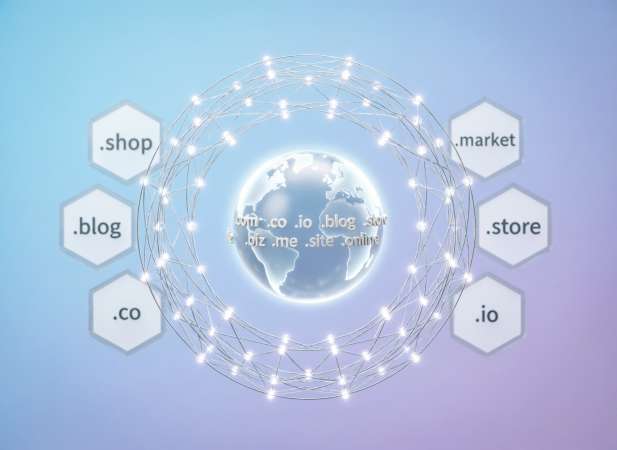
Choosing the right domain extension is one of the most impactful—yet often overlooked—decisions when launching a business, blog, or online store. Your domain isn’t just a web address; it’s a first impression, a branding signal, and a subtle cue that influences trust, memorability, and even search visibility. While .com remains the gold standard, hundreds of newer extensions like .store, .blog, and .io now offer targeted alternatives that can better reflect your purpose—if used wisely. But not all domain endings are created equal: some boost credibility, while others may confuse visitors or raise red flags with search engines. In this guide, we’ll cut through the noise and help you identify the best domain extensions based on your specific goals—whether you’re building a corporate brand, sharing insights through a personal blog, or running an e-commerce shop. You’ll learn which extensions align with user expectations, support long-term growth, and avoid common pitfalls that could hurt your online presence.
Why Your Domain Extension Matters More Than You Think
Your domain extension—technically the top-level domain (TLD)—functions as a silent credibility signal across the digital ecosystem. It shapes immediate user perception, influences email deliverability rates, and provides contextual cues to search algorithms about your site’s purpose and geographic relevance. This seemingly small component directly impacts bounce rates, brand recall, and even transactional trust before visitors engage with a single piece of content.
Established extensions like .com carry ingrained user confidence through decades of consistent association with legitimate businesses. Purpose-driven TLDs (.store, .blog, .tech) offer strategic clarity when aligned with audience expectations, but obscure or novelty extensions may trigger spam filters, complicate verbal sharing, or inadvertently signal low authority. Email systems particularly scrutinize less common TLDs, potentially affecting inbox placement for critical communications like order confirmations or client outreach.
Operationally, TLD selection intersects with DNS management, SSL validation workflows, and geo-targeting precision. Country-code domains (ccTLDs) strengthen local market relevance but introduce registry-specific compliance requirements. Registry policies also vary significantly—some mandate identity verification, impose residency constraints, or feature non-standard renewal cycles that impact long-term domain stewardship. These technical and administrative layers underscore why this decision demands strategic foresight beyond mere availability.
Key Factors to Consider Before Choosing a Domain Extension
Selecting the optimal domain extension requires balancing multiple strategic considerations that extend far beyond simple availability. Your choice establishes foundational elements of your digital identity and influences long-term operational flexibility across hosting environments, branding initiatives, and market positioning.
Brand Identity and Memorability form the cornerstone of effective domain selection. A strong extension should reinforce your brand narrative while remaining intuitive for verbal communication and recall. Complex or unfamiliar TLDs may create friction during customer referrals or offline marketing efforts, undermining organic growth potential.
Target Audience and Geographic Relevance directly impact user trust and search visibility. Country-code TLDs (ccTLDs) signal local market commitment and can enhance regional SEO performance, but they may limit perceived accessibility for global audiences. Conversely, generic TLDs offer broader appeal but lack geographic specificity that local customers often seek.
Industry Alignment and Professional Perception influence credibility before users even engage with your content. Established sectors maintain implicit TLD associations—.com for commerce, .org for non-profits, .edu for academic institutions. Deviating from these conventions requires deliberate justification to avoid appearing unprofessional or experimental.
Availability and Future Scalability demand forward-thinking evaluation. While securing your preferred .com may prove challenging, settling for obscure alternatives can create technical complications with email deliverability, SSL certificate issuance, or third-party service integrations. Consider how your domain choice accommodates potential business expansion, service diversification, or international growth without necessitating costly migrations later.
These interconnected factors require careful weighing against your specific objectives, audience expectations, and long-term digital strategy to ensure your domain extension serves as an asset rather than a constraint.
Brand Identity and Memorability
Your domain extension functions as a silent brand ambassador—shaping first impressions before content loads. Strategic alignment between your TLD and core identity (e.g., .studio for creatives, .legal for law firms) creates immediate contextual relevance, reinforcing professionalism and audience trust across all touchpoints: websites, email signatures, marketing collateral, and verbal referrals.
Memorability directly impacts operational efficiency and growth. Universally recognized extensions like .com minimize cognitive load during recall, reducing typos, lost traffic, and vulnerability to typosquatting. In contrast, obscure or complex TLDs introduce friction in verbal sharing—critical for businesses relying on word-of-mouth, radio ads, or in-person networking. A domain that stumbles off the tongue becomes a barrier to organic acquisition.
Evaluate extensions through real-world usage: Can customers accurately type it after hearing it once? Does it avoid ambiguous characters (hyphens, numbers) that fracture recall? Does it maintain credibility in professional email addresses? Consider how it integrates with your visual identity—length, rhythm, and phonetic clarity matter. A domain should feel intuitive to your specific audience while supporting cohesive brand architecture across digital and physical channels. This foundational choice influences long-term brand equity far beyond its technical function.
Target Audience and Geographic Relevance
Geographic top-level domains (ccTLDs) function as immediate trust signals within specific markets, directly influencing user perception and search engine geo-targeting behavior. Extensions like .uk, .de, or .ca communicate localized presence to both visitors and regional search algorithms, often improving visibility in country-specific results without manual configuration. This inherent geographic signaling builds instant credibility among local audiences who associate country-code domains with legitimate, regionally established entities.
However, this localization carries strategic implications. While a .au domain strengthens trust among Australian consumers, it may unintentionally limit perceived accessibility for international visitors. Generic TLDs (.com, .net) offer neutral global positioning but require deliberate geo-targeting through Search Console settings, hreflang implementation, and localized content architecture to achieve comparable regional relevance. Registry policies further complicate decisions—many ccTLDs enforce local presence verification, residency documentation, or jurisdictional compliance that impacts registration feasibility and renewal workflows.
Technical infrastructure considerations intersect with TLD selection. Pairing a ccTLD with geographically optimized hosting infrastructure minimizes latency and aligns DNS resolution patterns with user expectations. For businesses operating across multiple regions, a hybrid approach often proves optimal: a primary .com for global reach supplemented by strategically deployed ccTLDs for distinct markets—each supported by localized hosting environments to maximize performance and regional search authority without fragmenting brand cohesion.
Industry Alignment and Professional Perception
Certain domain extensions carry implicit industry associations that shape immediate professional credibility. Established conventions—.com for commerce, .org for non-profits, .edu for accredited institutions—create user expectations that influence trust before content engagement. Deviating from these norms requires strategic justification: a law firm using .law may enhance specialization signaling, while the same entity on an obscure novelty TLD could trigger skepticism during client vetting processes.
Professional perception extends beyond visual branding into technical trust ecosystems. Email deliverability systems, spam filters, and enterprise security gateways often apply reputation scoring based partly on TLD history. Extensions with documented abuse patterns or minimal registry oversight may face stricter filtering, impacting critical business communications like client contracts or transactional notifications. Similarly, SSL certificate authorities maintain varying validation requirements across TLDs, occasionally introducing friction during security implementation.
Industry-specific extensions (.tech, .design, .finance) offer contextual clarity when audience familiarity exists, but their effectiveness depends on sector maturity and user recognition. In conservative fields like finance or healthcare, traditional extensions often convey stability and regulatory compliance more effectively than newer alternatives. Evaluate extensions against your audience's technical literacy and industry norms—what signals innovation in tech startups may undermine authority in regulated professions. This alignment between TLD selection and professional context directly impacts conversion psychology, client acquisition costs, and long-term brand equity in competitive markets.
Availability and Future Scalability
Domain availability often forces compromise between ideal branding and practical registration—yet this decision carries long-term technical and strategic implications. While premium .com domains may be unavailable or prohibitively priced, settling for obscure alternatives introduces risks: limited resale value, complex migration paths, and potential conflicts during brand expansion. Evaluate extensions through a scalability lens—will your chosen TLD accommodate service diversification, geographic expansion, or acquisition without necessitating disruptive rebranding?
Technical scalability intersects with DNS architecture and infrastructure planning. Overly niche TLDs may face compatibility challenges with legacy systems, third-party API integrations, or enterprise email platforms. Registry policies further impact long-term stewardship: some extensions enforce non-standard renewal cycles, restrictive transfer locks, or mandatory re-verification processes that complicate domain portfolio management at scale. These operational constraints become magnified when managing multiple properties across hosting environments.
Future-proofing requires anticipating business evolution. A .shop domain serves e-commerce effectively today but may feel restrictive if your venture expands into SaaS or content publishing tomorrow. Similarly, hyper-localized ccTLDs can hinder international growth despite strengthening regional presence initially. Consider defensive registration strategies—securing key variants across primary TLDs—to protect brand equity and prevent customer diversion to typosquatted domains. Ultimately, the optimal extension balances immediate availability with architectural flexibility, ensuring your domain foundation supports growth rather than constraining it through technical debt or perception limitations.
Top Domain Extensions for Businesses
Selecting a domain extension for a business demands strategic alignment with credibility benchmarks, operational requirements, and audience expectations. The optimal choice reinforces professional identity while integrating smoothly with critical infrastructure—email deliverability systems, SSL certificate workflows, DNS management protocols, and enterprise security frameworks. Registry stability, historical trust metrics, and compatibility with third-party business tools (CRM platforms, payment gateways, analytics suites) further influence long-term viability.
This analysis focuses on extensions validated across diverse commercial contexts: established enterprises requiring universal recognition, scaling startups prioritizing brand clarity, and specialized ventures seeking industry-specific signaling. We evaluate each option against concrete criteria—user trust patterns, technical resilience, geographic flexibility, and alignment with search engine trust signals—avoiding subjective preferences in favor of evidence-based recommendations. The following subsections detail specific extensions that consistently support business objectives while mitigating risks associated with obscure or poorly governed TLDs.
.com – The Universal Standard for Credibility
Administered by Verisign under ICANN governance, the .com registry operates one of the most robust and globally distributed DNS infrastructures, maintaining exceptional uptime and resilience across decades of internet evolution. This technical maturity, combined with deep-rooted user psychology, establishes .com as the default expectation for legitimate business presence. Studies consistently correlate .com addresses with higher perceived trustworthiness—translating to improved email open rates, reduced cart abandonment, and stronger conversion metrics across e-commerce and lead-generation contexts.
Operationally, .com domains integrate flawlessly with enterprise-grade systems: email authentication protocols (SPF/DKIM/DMARC), SSL/TLS certificate workflows, payment gateway validations, and legacy business applications require zero special handling. Unlike newer or regionally constrained TLDs, .com faces minimal scrutiny from spam filters, corporate security gateways, or international compliance frameworks. While premium .com domains may involve strategic investment, the long-term value lies in brand protection (mitigating typosquatting risks), global market accessibility without geographic misinterpretation, and seamless scalability across service expansions. For organizations prioritizing enduring digital equity, securing the .com variant—through thoughtful naming adaptations if necessary—provides an unambiguous foundation that supports growth without compromising credibility or introducing technical debt.
.co – A Modern Alternative for Startups and Companies
Originally Colombia’s country-code top-level domain (ccTLD), .co has evolved into a globally recognized business-focused extension through deliberate rebranding and strategic registry management. Its concise structure—mirroring common corporate abbreviations—resonates strongly within startup ecosystems, venture communities, and innovation-driven sectors where brevity enhances brand recall across digital touchpoints and verbal referrals.
Registry operator .CO Internet S.A.S. maintains rigorous security protocols, including mandatory domain locking, two-factor authentication for account access, and proactive abuse monitoring aligned with ICANN compliance standards. This operational maturity ensures reliable DNS resolution and reduces vulnerability to unauthorized transfers—a critical consideration for scaling businesses managing sensitive customer data and transactional workflows.
While .co offers greater availability for premium naming opportunities compared to saturated .com inventories, strategic implementation requires awareness of user behavior patterns. Habitual .com appending may cause initial traffic diversion; mitigating this demands consistent visual reinforcement across all brand assets and, where feasible, defensive registration of the .com variant. Email deliverability remains robust when paired with proper authentication frameworks (SPF/DKIM/DMARC), though legacy enterprise systems occasionally require explicit whitelist configuration during onboarding.
For ventures prioritizing contemporary positioning without sacrificing technical credibility—particularly in tech, SaaS, or creative industries—.co delivers a balanced solution. Its acceptance by major platforms (social media handles, app stores, payment processors) and seamless integration with modern hosting environments make it a pragmatic choice when the ideal .com is unavailable, provided branding efforts explicitly normalize the extension within the target audience’s mental model.
.io – Popular Among Tech Firms and SaaS Platforms
Originally designated as the country-code top-level domain (ccTLD) for the British Indian Ocean Territory, .io has been organically adopted by the technology sector due to its semantic resonance with "input/output"—a foundational computing concept. This contextual alignment, coupled with its concise structure, has established .io as a recognized signal within developer communities, venture ecosystems, and B2B tech markets for startups, APIs, developer tools, and cloud-native applications.
Registry operations under Internet Computer Bureau (ICB) maintain enterprise-grade DNS infrastructure with global anycast distribution, supporting the high-availability requirements of mission-critical applications. Technical integration remains seamless across modern CI/CD pipelines, container orchestration platforms, and API gateway configurations. Email deliverability performs reliably when paired with rigorous authentication protocols (SPF/DKIM/DMARC), though legacy corporate security gateways may require initial whitelist configuration during onboarding phases.
Strategic considerations warrant attention: .io operates under ccTLD governance frameworks, which historically involved premium pricing tiers and specific contractual terms. Recent stewardship transitions have prompted increased scrutiny regarding ethical sourcing and territorial representation—factors ethically conscious organizations should evaluate. While search engines assess content quality and site architecture over TLD preference, audience perception remains context-dependent: .io conveys innovation within technical circles but may lack immediate recognition among non-digital-native consumers or regulated industries where .com dominance persists. For ventures whose core audience actively associates .io with technical credibility, this extension delivers precise signaling without compromising operational resilience.
.biz – Clear Intent for Commercial Use (With Caveats)
The .biz top-level domain (TLD) was introduced in 2001 as a dedicated namespace for businesses, offering an alternative to the saturated .com space. Its very designation—derived from “business”—signals commercial intent, making it immediately recognizable to users and search engines alike as a domain suited for enterprises, e-commerce platforms, professional services, and B2B operations.
From a branding standpoint, .biz provides clarity: visitors understand they’re engaging with a commercially oriented entity. This semantic alignment can enhance user trust and reduce bounce rates, particularly when paired with transparent website practices and verified business credentials. Additionally, registry policies for .biz require registrants to represent legitimate commercial activity, reinforcing its role as a business-exclusive namespace—though enforcement mechanisms are largely reactive rather than preventative.
However, practical adoption presents caveats. Despite its official standing under ICANN oversight, .biz has not achieved parity with legacy gTLDs like .com or .net in terms of universal recognition. Some users may perceive it as less authoritative or associate it with lower-tier websites—a perception rooted more in historical usage patterns than technical limitations. Search engines treat .biz neutrally from an SEO perspective, but brand recall and direct traffic can suffer if audiences default to typing .com.
Operational considerations also apply. Domain availability is generally higher than in premium TLDs, which benefits startups seeking short, memorable names. Yet, this accessibility can lead to increased scrutiny from spam filters or ad platforms unfamiliar with newer or niche domains. Businesses should complement their .biz registration with robust SSL implementation, consistent NAP (Name, Address, Phone) citations, and clear privacy policies to bolster credibility.
Ultimately, .biz remains a viable option for organizations prioritizing domain semantics over convention—provided they account for audience expectations and invest in complementary trust signals. When aligned with a coherent digital strategy, it functions not as a compromise, but as a deliberate, purpose-driven choice within the broader domain name ecosystem.
Best Domain Extensions for Blogs
Selecting an appropriate top-level domain (TLD) for a blog requires balancing audience perception, memorability, and strategic positioning. While search engines treat most generic TLDs neutrally for ranking purposes, user psychology and brand alignment remain decisive factors.
The .com extension retains primacy for blog deployments due to universal recognition and ingrained user behavior. Its dominance in direct navigation reduces friction for returning visitors and simplifies marketing efforts. When available, .com remains the optimal choice for professional bloggers seeking maximum reach and credibility.
Where .com is unavailable, .net serves as a respected alternative with comparable technical infrastructure and registry stability. Though historically associated with network services, it has matured into a versatile option for content-driven properties. Similarly, .org carries inherent trust signals for blogs focused on education, advocacy, or community-building—provided the content aligns with its non-commercial connotations.
Specialized gTLDs like .blog offer semantic clarity but present tradeoffs. While instantly communicating purpose, these newer extensions lack the reflexive user adoption of legacy TLDs. They may also face heightened scrutiny from email deliverability systems or ad platforms unfamiliar with niche namespaces. Reserve such extensions for secondary properties or when brand protection necessitates defensive registration.
Country-code TLDs (ccTLDs) like .co.uk or .ca prove advantageous for geo-targeted content strategies, signaling local relevance to both audiences and search engines. However, they may inadvertently limit perceived scope for blogs aiming at global readership.
Critical considerations extend beyond extension selection: ensure DNS hosting reliability, implement proper WHOIS privacy protocols, and maintain consistent SSL/TLS coverage regardless of TLD choice. Registry lock features and auto-renewal settings further protect blog continuity against accidental expiration.
Ultimately, prioritize extensions that reinforce your blog’s authority while minimizing cognitive load for your audience. A memorable, pronounceable domain on a stable TLD—paired with high-quality content—forms the foundation of sustainable readership growth.
.blog – Purpose-Built and Instantly Recognizable
Launched in 2016 and stewarded by Identity Digital under ICANN oversight, the .blog generic top-level domain (gTLD) delivers unambiguous semantic signaling. Its architecture intentionally aligns domain identity with content purpose—immediately communicating editorial focus to visitors, search crawlers, and platform algorithms without requiring contextual interpretation.
This precision strengthens digital identity for independent writers, niche publications, corporate content hubs, and portfolio showcases. Domains like insights.yourbrand.blog create intuitive information architecture, simplifying audience navigation while reinforcing content strategy. Enhanced memorability reduces typographical errors during direct access attempts, and the extension’s inherent topical relevance can improve contextual alignment in SERP snippets and social metadata displays.
Technical implementation warrants attention. While modern DNS infrastructure fully supports .blog with standard TTL configurations and DNSSEC compatibility, some legacy email filtering systems or ad verification workflows may initially flag newer gTLDs. Proactive measures—such as implementing SPF/DKIM/DMARC records, maintaining consistent SSL/TLS coverage, and verifying domain ownership across analytics platforms—mitigate potential friction points. Registry policies include robust anti-abuse frameworks and standardized WHOIS privacy options to safeguard publisher integrity.
Perception considerations remain nuanced. Though .blog carries strong topical authority within content ecosystems, audiences with deeply ingrained .com expectations may require subtle on-site reinforcement of credibility (e.g., author bios, publication dates, editorial standards). Its greatest strategic value emerges when deployed intentionally: for dedicated content properties where clarity outweighs conventional extension bias. When integrated thoughtfully within a cohesive digital presence—supported by reliable hosting infrastructure, consistent publishing cadence, and transparent engagement practices—.blog functions as a deliberate, modern identifier for today’s content-driven landscape.
.me – Personal, Engaging, and Great for Solo Creators
The .me top-level domain (TLD) offers a concise, intuitive namespace ideally suited for individuals establishing a distinct digital identity. Originally designated as the country code TLD for Montenegro, .me has evolved into a globally recognized extension for personal branding, portfolio sites, and creator-driven platforms. Its semantic clarity—directly referencing the self—resonates with freelancers, artists, consultants, and independent professionals seeking to convey authenticity and approachability.
From a technical standpoint, .me domains are fully compliant with ICANN standards and support modern DNS configurations, including DNSSEC for enhanced security and TLS certificate integration for encrypted connections. Registry operations are managed by doMEn, ensuring stable infrastructure, reliable WHOIS services, and adherence to data protection regulations such as GDPR. This operational rigor provides registrants with both performance consistency and regulatory confidence.
For solo creators, the brevity of .me enhances memorability and facilitates clean URL structures—critical for social sharing, email signatures, and cross-platform consistency. Unlike generic or overly commercial extensions, .me inherently signals a human-centric presence, which can improve audience trust and engagement metrics. Search engines treat it as a standard gTLD, meaning SEO performance hinges on content quality and site architecture rather than domain extension bias.
Use cases span personal blogs, résumé hubs, project showcases, micro-SaaS landing pages, and even redirect domains for vanity URLs (e.g., go.yourname.me). The extension’s flexibility supports both static and dynamic web applications, integrating seamlessly with contemporary hosting environments, CDNs, and serverless deployment models. Additionally, premium .me domains often retain strong resale value due to their linguistic intuitiveness and scarcity of short, dictionary-based names.
When evaluating domain options, professionals should consider not only availability but also long-term brand coherence. A .me address eliminates ambiguity—it clearly belongs to an individual, not a corporation—making it a strategic asset in an era where personal credibility directly influences digital reach. Coupled with proper DNS hygiene, HTTPS enforcement, and responsive design, a .me domain forms a foundational element of a trustworthy, user-focused online presence.
.site or .online – Flexible Options When .com Isn’t Available
Generic top-level domains (gTLDs) like .site and .online deliver pragmatic solutions when traditional namespaces are unavailable, offering semantic clarity and professional viability without compromising digital credibility. These ICANN-accredited extensions—managed by established registry operators like Radix—provide immediate contextual signaling: .site denotes a dedicated web property, while .online conveys active digital availability, aligning precisely with user intent and project scope.
Technically robust, both TLDs support full DNSSEC implementation, TLS/SSL certificate provisioning, and modern email authentication protocols (SPF, DKIM, DMARC). Search engines evaluate them identically to legacy extensions; visibility hinges on content relevance, mobile optimization, structured data, and core web vitals—not the domain suffix. Registry infrastructure ensures 99.9%+ uptime SLAs, low-latency global anycast DNS, and GDPR-compliant WHOIS services, meeting enterprise-grade reliability benchmarks.
Strategic applications include campaign microsites (launch.yourbrand.site), service portals (support.yourbrand.online), portfolio hubs, or regional deployments where namespace clarity enhances user navigation. Their descriptive nature reduces cognitive load during sharing and reinforces brand messaging. Both integrate seamlessly with cloud hosting platforms, serverless frameworks, and CDN ecosystems without configuration constraints.
Adoption success depends on intentional implementation: select the extension that authentically reflects the project’s function, maintain consistent branding across digital touchpoints, and prioritize technical fundamentals—HTTPS enforcement, crawlability, and performance optimization. When deployed with architectural diligence, these gTLDs transcend mere availability alternatives; they become deliberate components of a cohesive, trustworthy digital identity that resonates with audiences and withstands evolving web standards.
Avoiding Overly Niche TLDs That Hurt Reader Trust
Selecting a domain extension requires balancing creativity with perceptual credibility. While the domain namespace has expanded significantly, certain overly specialized or obscure TLDs carry implicit trust penalties due to historical abuse patterns, registry instability, or cognitive friction during user interaction. Extensions frequently associated with spam campaigns, phishing infrastructure, or transient projects—such as some low-cost generic TLDs with minimal registration vetting—can trigger subconscious skepticism, elevating bounce rates and undermining conversion potential.
User trust operates on heuristic cues: unfamiliar extensions demand additional cognitive processing, introducing friction at critical engagement moments. Research indicates visitors subconsciously associate domain familiarity with institutional legitimacy. When encountering an obscure namespace, users may question operational longevity, security posture, or professional commitment—regardless of actual site quality. This perception gap proves especially consequential for entities handling sensitive data, financial transactions, or reputation-dependent services.
Registry-level factors further influence risk exposure. Reputable registries enforce abuse monitoring, implement rapid takedown protocols, and maintain transparent WHOIS policies. Conversely, registries with lax oversight or opaque ownership structures often correlate with higher malware distribution rates, negatively impacting all domains under their namespace through association. Search engines do not inherently penalize valid TLDs algorithmically, but user behavior signals—dwell time, return visits, sharing frequency—indirectly affect organic performance when trust barriers exist.
Strategic domain selection prioritizes audience context over novelty. A boutique creative studio might leverage a descriptive extension effectively; a financial advisor or healthcare provider should prioritize established namespaces that signal stability. Evaluate prospective TLDs by reviewing their abuse statistics via Spamhaus or Google Safe Browsing datasets, registry accreditation status, and prevalence within your industry vertical. When credibility is paramount, semantic clarity and perceptual safety outweigh marginal availability advantages. A domain functions as digital handshake—its extension should reinforce, not undermine, the trust you aim to build.
Ideal Domain Extensions for E-commerce Stores
For digital commerce ventures, domain extension selection directly influences consumer confidence, transactional security perception, and long-term brand equity. The .com namespace remains the dominant standard due to decades of user conditioning—shoppers instinctively associate it with established commercial entities, reducing friction during checkout and improving recall. When unavailable, purpose-built retail TLDs like .store and .shop offer semantic precision while maintaining professional credibility, provided they're backed by reputable registry operators with robust abuse-prevention frameworks.
Geographic targeting warrants strategic consideration of country-code TLDs (ccTLDs) such as .co.uk or .de for localized market penetration. These signal regional presence to both users and search engines, potentially improving local SERP visibility. However, they require demonstrable physical or legal presence in many jurisdictions and may complicate global expansion efforts. Hybrid approaches—using a .com primary domain with ccTLD redirects for regional campaigns—often balance scalability with localization needs.
Technical infrastructure underpinning the TLD critically impacts operational resilience. Prioritize extensions whose registries support DNSSEC for zone integrity, offer rapid propagation times, and maintain transparent WHOIS policies compliant with data protection regulations. Avoid namespaces with documented histories of lax registration vetting, as these correlate with elevated phishing risk—a critical concern when handling payment data. All credible e-commerce domains must support TLS certificate issuance without restriction; verify compatibility with major certificate authorities before registration.
Consumer psychology plays an underappreciated role: unfamiliar or overly playful TLDs introduce cognitive friction during high-stakes moments like payment entry. Trust signals—SSL padlocks, recognizable domain patterns, and consistent branding—compound to reduce cart abandonment. While search engines treat valid gTLDs equally in ranking algorithms, user behavior metrics (time-on-site, return visits) indirectly affect organic performance when trust barriers exist.
Ultimately, extension selection should align with brand longevity strategy. Premium namespaces with strong resale liquidity provide exit flexibility, while descriptive TLDs should authentically reflect business function without appearing gimmicky. The domain forms the foundation of digital trust architecture—its extension must reinforce, not undermine, the security and professionalism essential to transactional environments.
.store – Direct, Clear, and Optimized for Online Retail
The .store generic top-level domain (gTLD) functions as a purpose-built namespace for digital commerce, delivering immediate semantic clarity that aligns user expectations with transactional intent. Operated by Radix Registry under ICANN accreditation, this extension provides a professionally recognized identifier for product catalogs, brand storefronts, and omnichannel retail initiatives where domain intuitiveness directly supports conversion pathways.
Technically, .store domains fully support DNSSEC for zone integrity verification, seamless TLS certificate issuance across major certificate authorities, and compatibility with PCI DSS-aligned hosting environments. Registry infrastructure maintains robust abuse-monitoring protocols and rapid takedown procedures, mitigating namespace-associated risks that could compromise merchant credibility. Global anycast DNS distribution ensures sub-100ms resolution times critical for cart abandonment reduction.
Consumer perception studies indicate descriptive retail TLDs reduce cognitive friction during navigation—shoppers instantly recognize commercial intent without decoding ambiguous extensions. This perceptual efficiency, when paired with visible trust signals (HTTPS enforcement, payment gateway badges, transparent policies), reinforces transactional confidence. Search engines treat .store identically to legacy namespaces; organic performance remains contingent on product schema markup, Core Web Vitals optimization, and authoritative content architecture.
Strategic implementation requires verifying trademark availability via ICANN’s TMCH, configuring GDPR-compliant WHOIS privacy, and aligning domain lifecycle management with business continuity protocols. While ideal for standalone ventures, seasonal campaigns, or product-line microsites, its efficacy is maximized within a holistic digital ecosystem prioritizing mobile-first UX, secure checkout flows, and transparent customer service pathways.
Ultimately, .store succeeds not through novelty, but through precise contextual signaling. Its value emerges when domain semantics authentically reflect operational rigor—where technical reliability, brand consistency, and user-centric design converge to build lasting commercial trust.
.shop – Widely Supported and Intuitive for Shoppers
The .shop generic top-level domain (gTLD), operated by GMO Registry under ICANN accreditation, delivers immediate commercial context that aligns precisely with user intent during digital shopping journeys. Its linguistic transparency reduces cognitive friction—visitors instantly recognize transactional purpose, fostering quicker engagement and reinforcing brand clarity without explanatory overhead.
Technically robust, .shop domains fully support DNSSEC for DNS integrity validation, seamless TLS certificate provisioning across all major certificate authorities, and native compatibility with leading e-commerce platforms (Shopify, WooCommerce, BigCommerce), payment gateways, and global CDN networks. Registry infrastructure maintains stringent abuse-monitoring protocols and rapid incident response frameworks, safeguarding namespace integrity critical for merchant credibility.
Trust formation hinges on contextual alignment. The extension’s semantic precision complements visible security signals—HTTPS enforcement, PCI DSS-aligned hosting environments, and transparent return policies—to cultivate shopper confidence at critical decision points. While search engines treat .shop identically to legacy TLDs algorithmically, improved user behavior metrics (reduced bounce rates, higher cart completion) often follow from intuitive domain recognition.
Strategic implementation requires trademark verification via the ICANN Trademark Clearinghouse (TMCH), GDPR/CCPA-compliant WHOIS management, and integration within a cohesive digital ecosystem prioritizing mobile-optimized checkout flows and accessible customer support pathways. Its efficacy is maximized when the namespace authentically reflects the business model—ideal for direct-to-consumer brands, artisan marketplaces, or product-focused microsites.
Ultimately, .shop functions as a precise digital signpost. Its value emerges not from novelty, but from harmonizing technical reliability, perceptual clarity, and user-centric design to strengthen the foundational trust required for sustainable e-commerce growth.
.market or .shopping – Contextual but Less Recognizable
While .market and .shopping TLDs convey clear commercial intent, their comparatively lower global recognition warrants careful strategic assessment for e-commerce implementations. Operated by accredited registries with full technical parity—supporting DNSSEC, TLS certificate issuance, and standard DNS propagation protocols—their primary constraint lies in user perception rather than infrastructure capability.
Market adoption data indicates these extensions lack the ingrained consumer familiarity of .com, .store, or .shop. During high-stakes interactions like payment entry, unfamiliar namespaces may introduce subtle cognitive friction, potentially elevating bounce rates or triggering verification behaviors (e.g., manual URL re-entry). This perceptual gap is particularly relevant for cold-traffic acquisition or audiences less accustomed to newer gTLDs.
Effectiveness hinges on compensatory trust architecture. When deploying these extensions, reinforce credibility through visible security indicators (SSL badges, PCI compliance statements), consistent cross-channel branding, and frictionless UX design. Strong pre-existing brand recognition or targeted audience education campaigns can mitigate recognition deficits. For B2B marketplaces or niche verticals where semantic precision aligns tightly with audience expectations—such as artisan.market—contextual relevance may outweigh recognition concerns.
Always verify registry-specific policies regarding trademark protection (via TMCH), WHOIS privacy compliance, and abuse response protocols. Supplement domain selection with robust technical fundamentals: mobile-optimized checkout flows, transparent return policies, and third-party trust seals. Analytics monitoring—tracking session duration, cart abandonment rates, and referral source performance—provides empirical validation of user trust signals.
These TLDs serve best as intentional components within a holistic digital strategy, not default alternatives. Prioritize audience familiarity metrics alongside semantic appeal; when brand strength and supplementary trust elements are rigorously implemented, contextual extensions can function effectively without compromising transactional confidence.
When to Stick with .com for Maximum Conversion Confidence
The .com namespace delivers unparalleled conversion confidence in transactional environments where user trust directly impacts commercial outcomes. Decades of digital conditioning have cemented .com as the implicit standard for legitimate business operations—shoppers instinctively associate it with established entities, reducing cognitive friction during payment flows and minimizing cart abandonment triggered by domain unfamiliarity.
This perceptual advantage proves critical for high-stakes contexts: financial services, healthcare platforms, B2B enterprise solutions, and any venture processing sensitive personal or payment data. Users demonstrate measurably lower hesitation when entering credentials on familiar namespaces, with studies indicating elevated bounce rates on obscure TLDs during checkout sequences. While search engines evaluate all ICANN-accredited TLDs equally algorithmically, human behavior signals—session duration, return visit frequency, and referral sharing—indirectly influence organic performance when trust barriers exist.
Global audience considerations further reinforce .com's strategic value. Its universal recognition transcends regional digital literacy variations and language barriers, eliminating explanatory overhead during international expansion. Unlike country-code TLDs requiring demonstrable physical presence or niche gTLDs demanding contextual justification, .com functions as a neutral, expectation-aligned identifier across demographic segments.
Brand protection imperatives also favor canonical .com acquisition where feasible. Securing this namespace prevents competitor registration, mitigates typosquatting risks, and safeguards customer acquisition channels—essential for long-term equity preservation. When budget permits, pairing the primary .com with defensive registrations in relevant TLDs creates a comprehensive digital real estate portfolio.
Technical parity exists across modern TLDs; the distinction lies purely in perceptual psychology. For ventures prioritizing frictionless user journeys and minimizing trust friction, .com delivers conversion confidence through implicit legitimacy rather than explicit explanation—making it the prudent choice when audience expectations, transactional sensitivity, or global scalability are paramount.
Extensions to Approach with Caution
Certain top-level domains warrant deliberate evaluation due to registry-level risks, perceptual friction, or operational constraints that may undermine digital credibility. Extensions with documented histories of lax registration policies, minimal abuse monitoring, or elevated spam association—often reflected in blocklist prevalence via Spamhaus or SURBL—can inadvertently transfer reputational risk to registrants through namespace-level stigma.
User trust operates on recognition heuristics. Obscure or novelty-focused TLDs introduce cognitive friction during critical interactions, potentially elevating bounce rates or triggering verification behaviors. This perceptual barrier proves especially consequential for entities handling sensitive data, financial transactions, or reputation-dependent services where implicit legitimacy directly influences conversion pathways.
Registry stability constitutes a foundational risk factor. Prioritize ICANN-accredited operators with transparent ownership structures, published SLAs, and demonstrable incident response protocols. Avoid namespaces managed by entities with histories of sudden policy shifts, abrupt pricing changes, or regulatory non-compliance—factors that jeopardize long-term domain continuity and complicate migration planning.
Technical constraints occasionally manifest in certificate authority compatibility issues, delayed DNS propagation, or limited support for DNSSEC implementation. Verify TLS certificate issuance pathways and DNS infrastructure robustness before adoption, particularly for transactional environments requiring PCI DSS alignment.
Geopolitical considerations also apply: certain country-code TLDs impose residency requirements, content restrictions, or data localization mandates that complicate global operations. Similarly, trademark enforcement mechanisms vary significantly across registries—absence of TMCH integration or rapid takedown procedures heightens brand protection vulnerabilities.
Strategic due diligence includes reviewing abuse statistics via third-party threat intelligence feeds, assessing registry financial stability, and evaluating namespace prevalence within your industry vertical. When credibility, longevity, or compliance are paramount, perceptual safety and operational rigor outweigh marginal availability advantages. Domain selection forms a trust boundary—its extension should reinforce institutional legitimacy, not necessitate explanatory overhead.
New gTLDs with Low User Recognition
New generic top-level domains with minimal mainstream adoption present a perceptual risk that often outweighs their technical viability. While ICANN-accredited and functionally equivalent to legacy namespaces—supporting DNSSEC, TLS certificates, and standard propagation protocols—their unfamiliarity introduces cognitive friction during critical user interactions. Visitors encountering obscure extensions may subconsciously question operational legitimacy, particularly during credential entry or payment processing, potentially elevating bounce rates and cart abandonment.
Trust formation relies heavily on recognition heuristics. Decades of digital conditioning have established implicit associations between familiar TLDs and institutional credibility. Low-recognition gTLDs disrupt this heuristic, demanding additional mental processing that can erode confidence in high-stakes contexts like financial services, healthcare platforms, or B2B transactions. Behavioral analytics frequently reveal measurable friction: users may manually retype URLs seeking a .com variant or exhibit heightened scrutiny of security indicators.
Registry-level factors compound these challenges. Some newer gTLDs suffer from inadequate abuse monitoring, leading to elevated spam or phishing prevalence within their namespace—a reputation that transfers implicitly to all registrants. Verify registry operator stability, published SLAs, and integration with threat intelligence feeds (Spamhaus, Google Safe Browsing) before adoption. Absence of Trademark Clearinghouse (TMCH) support further complicates brand protection efforts.
Strategic deployment requires audience-aware calibration. These extensions may function acceptably within closed ecosystems (internal tools, campaign microsites with controlled traffic) or highly niche communities where semantic novelty aligns with brand identity. However, for public-facing properties prioritizing conversion efficiency, global scalability, or handling sensitive data, perceptual safety should supersede namespace availability. Supplemental trust architecture—visible security badges, transparent policies, consistent cross-channel branding—can partially offset recognition deficits but rarely eliminates them entirely.
Ultimately, domain selection constitutes a trust boundary. When audience expectations and transactional sensitivity are paramount, established namespaces deliver frictionless legitimacy. Low-recognition gTLDs demand rigorous validation against measurable user behavior metrics, not theoretical appeal.
Free or Uncommon TLDs That Trigger Spam Filters
Certain free or rarely used top-level domains carry elevated reputational risk due to historical abuse patterns and weak registry oversight. These namespaces—often offered at no cost by under-resourced registries—are disproportionately represented in spam, phishing, and malware distribution campaigns. As a result, major email security gateways (including those from Google, Microsoft, and Proofpoint) and threat intelligence feeds (such as Spamhaus and SURBL) frequently apply heuristic filters that flag or block messages originating from these domains, regardless of sender intent.
The underlying issue stems from registry-level deficiencies: minimal identity verification during registration, absence of abuse monitoring teams, delayed takedown response times, and lack of integration with industry-standard reputation systems like DNSWL or URIBL. Even legitimate senders using such TLDs may inherit negative sender scores by association, leading to poor email deliverability, landing in spam folders, or outright rejection by corporate mail servers.
Web-based trust is similarly compromised. Security vendors often preemptively categorize entire TLDs based on aggregate abuse data. A site on a high-risk namespace may trigger browser warnings, reduced search visibility via Safe Browsing flags, or exclusion from ad networks and affiliate programs. This collateral damage affects all registrants—not just malicious actors—making recovery difficult without domain migration.
Common examples include certain country-code TLDs historically exploited due to lax policies, as well as obscure gTLDs with negligible market adoption and no trademark protection mechanisms. Free domain providers often bundle these extensions with restrictive terms, embedded ads, or limited DNS control, further degrading technical reliability and brand autonomy.
For mission-critical communications or customer-facing services, domain reputation must be evaluated alongside cost. Prioritize TLDs managed by ICANN-accredited registries with transparent abuse policies, active participation in threat-sharing initiatives, and demonstrable deliverability performance. When email integrity, brand safety, or transactional trust are non-negotiable, the marginal savings of a free or uncommon TLD are outweighed by operational and reputational liabilities.
Country Code Domains (ccTLDs) Outside Your Target Market
Country code top-level domains (ccTLDs) such as .de, .jp, or .ca are intrinsically tied to geographic jurisdictions and carry implicit expectations of local presence. Deploying a ccTLD outside its intended market introduces perceptual misalignment: users encountering .fr may reasonably assume French operations, language support, or EU data handling practices—creating trust friction when those expectations go unmet.
Search engines leverage ccTLDs as strong geotargeting signals. Google and Bing typically associate these namespaces with their respective countries in organic rankings, potentially limiting visibility in intended markets regardless of content language or server location. While Search Console geotargeting settings can override this for generic TLDs, ccTLDs generally lack this flexibility, constraining international SEO strategy.
Regulatory exposure presents a critical consideration. Many ccTLD registries enforce residency or local presence requirements; violations risk suspension without refund. More significantly, users and regulators may interpret ccTLD usage as establishing legal nexus—potentially triggering compliance obligations under local data protection laws (GDPR for EU-associated namespaces), consumer protection statutes, or tax regimes, even without physical operations.
Technical infrastructure quality varies substantially across ccTLD registries. Some operate robust, globally distributed DNS with DNSSEC support and rapid propagation; others maintain limited infrastructure with higher latency or inconsistent abuse monitoring. Verify registry SLAs, WHOIS policy transparency, and integration with certificate authorities before adoption.
Exceptions exist—certain ccTLDs like .io or .ai have achieved semi-generic status within specific verticals—but these carry their own reputation risks and escalating regulatory scrutiny. For globally targeted ventures, neutral gTLDs (.com, .net) paired with explicit hreflang annotations and localized content architectures provide more predictable audience alignment without geographic misrepresentation.
Strategic domain selection requires matching namespace semantics to operational reality. When audience expectations, regulatory boundaries, and search visibility must align precisely, geographic accuracy in domain choice prevents costly perceptual and technical misfires.
How to Secure the Right Domain with Madar Host
Selecting an optimal domain requires strategic alignment between namespace semantics, technical infrastructure, and long-term brand protection. Madar Host's domain management platform provides granular registry access across ICANN-accredited TLDs, enabling informed selection based on availability analytics, historical abuse metrics, and trademark conflict screening through integrated TMCH validation.
Begin with comprehensive namespace evaluation: prioritize extensions demonstrating strong registry stewardship—evidenced by DNSSEC support, rapid abuse response protocols, and transparent WHOIS policies compliant with GDPR/CCPA frameworks. Leverage bulk search tools to assess semantic variants and defensive registrations that prevent typosquatting or brand dilution. For commercial entities, validate PCI DSS compatibility and TLS certificate issuance pathways before finalizing selection.
Upon registration, implement layered security controls immediately: enable registry-lock where available to prevent unauthorized transfers, configure two-factor authentication for account access, and activate WHOIS privacy services to mitigate social engineering risks. Establish automated renewal protocols with payment method redundancy to prevent expiration-related service disruption—a leading cause of preventable brand vulnerability.
Technical integration requires precise DNS configuration aligned with hosting infrastructure. Madar Host's authoritative nameservers support low-latency global propagation, automated DNSSEC signing, and seamless delegation to CDN or cloud environments. For e-commerce deployments, verify CAA record compatibility with preferred certificate authorities to streamline TLS provisioning without manual intervention.
Proactive lifecycle management completes the security posture. Monitor domain health through expiration alerts, SSL certificate renewal notifications, and periodic reputation checks against threat intelligence feeds. For enterprises, implement centralized portfolio governance with role-based access controls and audit logging to maintain compliance across multi-domain estates.
Domain acquisition represents a foundational trust boundary—not merely a registration transaction. Through methodical selection, hardened configuration, and vigilant stewardship, organizations transform their namespace into a resilient component of digital infrastructure capable of sustaining long-term brand equity and operational continuity.
Frequently Asked Questions About Choosing Domain Extensions
Do TLDs impact search engine rankings? Major search engines treat all ICANN-accredited TLDs equally within core algorithms. Ranking factors center on content relevance, technical SEO hygiene, backlink authority, and Core Web Vitals—not the domain suffix. However, user behavior signals influenced by TLD familiarity (e.g., elevated bounce rates on obscure extensions) may indirectly affect visibility through engagement metrics.
Should I register multiple extensions for brand protection? Strategic defensive registration mitigates typosquatting and brand dilution. Prioritize securing your primary namespace (.com where feasible), then acquire relevant ccTLDs for operational markets and semantically similar gTLDs where confusion risk exists. Implement canonical tags and 301 redirects to consolidate link equity while maintaining a single authoritative destination.
How do I evaluate registry reliability? Assess registry operators through ICANN accreditation status, published infrastructure SLAs, DNSSEC adoption rates, abuse response timelines, and integration with threat intelligence feeds (Spamhaus, SURBL). Reputable registries maintain transparent WHOIS frameworks, GDPR-compliant data handling, and demonstrable incident response protocols—critical for long-term namespace stability.
Are newer gTLDs as secure as legacy extensions? Technically, yes—all accredited TLDs support identical DNS functionality, TLS certificate provisioning, and security protocols. The distinction lies in perceptual trust: users subconsciously associate familiar namespaces with legitimacy. For transactional environments handling sensitive data, this psychological friction can elevate cart abandonment despite equivalent technical security postures.
Frequently Asked Questions About Choosing Domain Extensions
Does a .com domain rank better in search engines than newer extensions?
No. Google and Bing explicitly state that domain extensions carry no inherent ranking advantage. Search algorithms evaluate content quality, site architecture, backlink profiles, and user experience metrics—not the TLD itself. However, .com domains may indirectly benefit from higher click-through rates due to user familiarity, which can positively influence engagement signals.
How much should I expect to pay annually for different domain extensions?
Registration costs vary significantly by registry pricing. Standard .com domains typically range from $8–$15/year through accredited registrars. Newer gTLDs like .store or .blog often launch at $20–$40/year but may offer first-year promotions. Premium domains (short, dictionary words) command substantially higher renewal fees. Always verify renewal pricing before registration, as introductory rates frequently increase at renewal.
Can I switch my website to a different domain extension later without losing SEO?
Yes, but requires meticulous execution. Implement 301 redirects from every old URL to its corresponding new URL, maintain identical content architecture, update all internal links, and submit both domains to Search Console with proper redirect validation. Expect temporary ranking fluctuations during the transition period (typically 4–8 weeks). Backlink profile strength and redirect accuracy determine recovery speed.
Are hyphenated domains bad for business credibility?
Hyphens introduce usability friction and perception risks. Users frequently omit hyphens when verbally sharing domains, leading to lost traffic. Studies indicate hyphenated domains receive 15–30% fewer direct visits than clean equivalents. Additionally, spammers historically exploited hyphenated domains for keyword stuffing, creating lingering trust associations. For professional ventures, prioritize non-hyphenated options even if it means selecting a slightly longer namespace.
What happens if my domain expires accidentally?
Expired domains enter a grace period (typically 30 days) where renewal remains possible at standard cost. After this, they move to redemption status (30 additional days) with significantly higher restoration fees ($60–$100+). Finally, domains enter a pending-delete phase before releasing to general availability. During expiration, DNS resolution fails—taking your website and email offline immediately. Enable auto-renewal and maintain current payment methods to prevent service disruption.
Do I need separate domains for my business website and blog?
Consolidating under a single domain (e.g., yourbusiness.com/blog) is strongly recommended. This architecture concentrates link equity, simplifies analytics tracking, and strengthens domain authority. Subdomains (blog.yourbusiness.com) fragment SEO value and complicate user navigation. Only consider separate domains for legally distinct entities or when targeting entirely different audience segments with no brand overlap.
How do I check if a domain name infringes on existing trademarks?
Conduct multi-layered verification: search USPTO's TESS database (U.S.), EUIPO's TMview (Europe), and WIPO's Global Brand Database for identical or confusingly similar marks in your industry class. Monitor common law usage through web searches. When uncertainty exists, consult an intellectual property attorney before registration. Trademark disputes can result in UDRP proceedings forcing domain surrender without compensation.
Is domain privacy protection worth the additional cost?
Yes for most businesses. Privacy services mask WHOIS contact details, reducing spam, phishing attempts, and unsolicited sales outreach. For sole proprietors or home-based businesses, it also prevents physical address exposure. Legitimate B2B entities may choose transparent WHOIS to signal operational legitimacy, but should impl