Best Hosting for Business Websites
Print- 0
Best Hosting for Business Websites
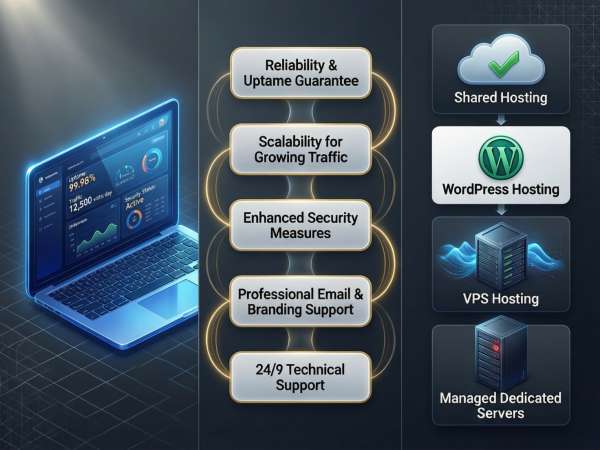
Why Business Websites Need Specialized Hosting
Unlike personal blogs or hobby sites, business websites carry operational, reputational, and financial weight. They must remain accessible, secure, and fast at all times—requirements that generic hosting plans rarely fulfill. Specialized hosting for businesses is engineered to meet these demands through optimized infrastructure, proactive security, and enterprise-grade reliability.
Standard shared hosting often shares server resources among hundreds of sites, creating performance bottlenecks during traffic spikes—a critical risk for e-commerce stores or service-based businesses relying on conversions. In contrast, business-oriented hosting allocates dedicated or prioritized resources, ensuring consistent response times even under load. This stability directly impacts user retention, bounce rates, and search engine rankings.
Security is another non-negotiable. Business sites handle customer data, transactions, and brand credibility. Specialized hosting includes hardened configurations, web application firewalls (WAF), automated malware scanning, and compliance-ready environments—features absent in entry-level plans. A single breach can erode trust permanently; robust hosting acts as the first line of defense.
Moreover, uptime isn’t just a metric—it’s a promise to customers. Reputable business hosting guarantees 99.9%+ uptime through redundant systems, real-time monitoring, and rapid incident response. Downtime translates to lost revenue and damaged reputation, making infrastructure resilience essential.
Finally, scalability matters. As your business grows, so do your technical needs. Specialized hosting offers seamless upgrades—from managed VPS to dedicated environments—without migration headaches or performance cliffs. This future-proofing ensures your digital presence evolves alongside your operations.
For a deeper understanding of how different hosting types align with business goals, explore our guide on types of web hosting and their differences.
Key Features to Look for in Business Hosting
Reliability and Uptime Guarantee
For any business website, reliability isn’t optional—it’s foundational. Downtime directly impacts revenue, customer trust, and brand reputation. A professional hosting solution must guarantee consistent availability, typically expressed through an uptime commitment of 99.9% or higher.
Uptime refers to the percentage of time a server remains operational and accessible over a given period. While 99.9% may sound marginal, it translates to just 43 minutes of allowable downtime per month—far less than many low-tier providers can reliably deliver. True reliability stems from redundant power systems, network failover mechanisms, real-time monitoring, and proactive maintenance protocols.
Business-grade hosting goes beyond marketing claims by implementing infrastructure designed for continuity: enterprise-grade hardware, distributed network architecture, and automated incident response. These measures ensure that even during traffic spikes or partial hardware failures, your site remains online and responsive.
Moreover, uptime affects more than just user access—it influences SEO performance. Search engines prioritize stable, consistently available sites, while frequent outages can lead to indexing delays or ranking drops. For e-commerce stores or service-based businesses, this reliability is inseparable from conversion rates and customer retention.
When evaluating hosting providers, verify whether uptime guarantees are backed by service-level agreements (SLAs) with compensation clauses, not just promotional promises. Transparency in historical uptime data and infrastructure documentation further signals operational maturity.
To understand how hosting infrastructure supports this reliability, explore our detailed overview of what a server is and how it works.
Scalability for Growing Traffic
Business websites rarely remain static—traffic grows, content expands, and functionality evolves. Scalability in hosting refers to the ability of your infrastructure to accommodate this growth seamlessly, without performance degradation or service disruption. A scalable solution ensures your site remains fast, stable, and accessible even during unexpected traffic surges or seasonal peaks.
True scalability isn’t just about adding more resources; it’s about architectural flexibility. Shared hosting, for instance, offers limited headroom—once neighboring sites consume shared CPU or RAM, your site suffers. In contrast, VPS and managed dedicated environments provide isolated, upgradable resources that scale with demand. This isolation prevents “noisy neighbor” issues and guarantees consistent performance as your audience grows.
Key indicators of a scalable hosting environment include:
- On-demand resource allocation (CPU, RAM, storage)
- Seamless plan upgrades without migration downtime
- Support for modern storage like NVMe, which maintains speed under load
- Horizontal scaling options, such as CDN integration or load balancing
For dynamic sites—especially e-commerce platforms or WordPress installations with heavy plugins—scalability directly impacts conversion rates. Slow page loads during peak hours can lead to cart abandonment and lost revenue. A well-architected hosting stack anticipates these scenarios and adapts in real time.
When evaluating scalability, consider not only current needs but projected growth over the next 12–18 months. Can your hosting plan accommodate a 3x increase in visitors? Does it support automated backups and staging environments for safe updates? These factors determine whether your infrastructure empowers growth or becomes a bottleneck.
To understand how different hosting types support scalability, refer to our detailed comparison of shared hosting vs. VPS.
Enhanced Security Measures
Business websites are prime targets for cyber threats due to the sensitive data they handle—customer information, payment details, and proprietary content. Standard hosting often lacks the layered security infrastructure required to mitigate modern risks like brute-force attacks, malware injections, or DDoS attempts. Enhanced security in business-grade hosting goes beyond basic firewalls; it integrates proactive, multi-tiered protection designed to preserve integrity, confidentiality, and availability.
Key components include a Web Application Firewall (WAF) that filters malicious traffic before it reaches your site, real-time malware scanning with automated cleanup, and hardened server configurations that close common attack vectors. Additionally, isolation technologies—such as those in VPS or managed dedicated environments—prevent cross-site contamination, ensuring a breach on one account doesn’t compromise others.
For WordPress-based business sites, which represent a large portion of commercial websites, specialized security is critical. Vulnerabilities in outdated plugins or themes are frequently exploited. A robust hosting environment includes automatic core and plugin updates, file integrity monitoring, and login hardening (e.g., two-factor authentication and IP whitelisting).
Compliance also plays a role: businesses handling transactions must adhere to standards like PCI-DSS, which require secure data transmission (SSL/TLS), regular vulnerability assessments, and secure backup protocols—all features embedded in professional hosting stacks.
Security isn’t just about prevention; it’s about resilience. Daily automated backups, point-in-time recovery options, and rapid incident response ensure minimal downtime and data loss if an intrusion occurs.
To learn how WordPress-specific threats are addressed in practice, see our guide on securing WordPress sites against common threats and exploits.
Professional Email and Branding Support
A business website’s credibility begins with its digital identity—and nothing undermines professionalism faster than a generic email address like @gmail.com or @yahoo.com. Professional email hosting, tied directly to your domain (e.g., contact@yourbusiness.com), reinforces brand consistency, builds trust with clients, and signals legitimacy to partners and customers alike.
Beyond appearance, branded email offers functional advantages. It integrates seamlessly with your website’s domain infrastructure, ensuring consistent DNS management and simplified authentication protocols like SPF, DKIM, and DMARC. These standards reduce the risk of emails being marked as spam and protect against phishing attempts that impersonate your business.
Business-grade hosting environments typically include robust email services with features such as:
- Custom email accounts per team member or department
- Webmail access with mobile synchronization
- Generous storage quotas and attachment limits
- Advanced filtering, forwarding, and autoresponder rules
- Secure IMAP/POP3 and SMTP with encryption (SSL/TLS)
These capabilities support day-to-day operations while maintaining a cohesive brand presence across all communication channels. For small businesses and startups, this eliminates the need for third-party email providers, streamlining administration and reducing costs.
Moreover, professional email is part of a broader branding ecosystem. When your website, domain, and email all reflect the same identity, it creates a unified experience that enhances recognition and recall. Customers are more likely to trust a business that presents itself cohesively—from its homepage to its inbox.
It’s also worth noting that free email services often lack compliance safeguards, audit trails, and data ownership controls—critical considerations for businesses handling sensitive inquiries or contractual communications. Hosting your email alongside your website ensures centralized control, better backup policies, and alignment with your overall security posture.
In essence, professional email isn’t just a convenience—it’s a strategic component of your online brand architecture, reinforcing credibility at every customer touchpoint.
24/7 Technical Support
For business websites, technical issues don’t follow office hours. A sudden outage at midnight or a security alert during a weekend can halt operations, damage customer trust, and result in lost revenue. That’s why round-the-clock technical support isn’t a luxury—it’s a necessity for any serious online presence.
True 24/7 support means more than just having a ticket system open at all times. It requires a responsive team of qualified engineers who can diagnose and resolve server-level issues—such as DNS misconfigurations, database failures, SSL errors, or resource overloads—without delay. Generic chatbots or outsourced tier-1 agents often lack the depth to address complex hosting problems, leading to prolonged downtime and frustration.
Business-grade hosting distinguishes itself through expert-backed, human-driven support available via multiple channels: live chat, phone, and email—with guaranteed response times. This ensures that whether you’re troubleshooting a slow-loading storefront or recovering from a failed update, help is immediate and effective.
Moreover, proactive monitoring complements reactive support. Leading providers implement infrastructure alerts that detect anomalies before they impact users—such as unusual traffic spikes, disk saturation, or failed backup jobs—and intervene automatically or notify administrators in real time.
The quality of support also reflects a provider’s operational maturity. Look for teams with direct access to server environments, not just control panel interfaces. This enables them to perform root-cause analysis, apply kernel-level fixes, or restore services from backups without requiring client-side intervention—critical for businesses without in-house IT staff.
Ultimately, reliable 24/7 technical support reduces operational risk. It transforms your hosting from a passive utility into an active safeguard, ensuring continuity, performance, and peace of mind—no matter when an issue arises.
Types of Hosting Suitable for Business Websites
Not all hosting solutions are created equal—especially when it comes to supporting the performance, security, and reliability demands of a business website. Choosing the right type depends on your traffic volume, technical requirements, growth trajectory, and operational complexity. Below are the primary hosting models suited for professional use.
Shared Hosting offers an entry point for small businesses or startups with limited traffic and budget constraints. While cost-effective, it shares server resources among multiple users, which can lead to performance bottlenecks during peak loads. It’s best suited for brochure-style sites or early-stage ventures not yet handling transactions or high visitor volumes.
WordPress Hosting is optimized specifically for WordPress-powered sites, which power over 40% of business websites globally. Managed WordPress plans include automatic updates, caching layers, security hardening, and staging environments—reducing maintenance overhead while improving speed and resilience. Ideal for content-driven businesses, agencies, and e-commerce stores using WooCommerce.
VPS (Virtual Private Server) Hosting provides dedicated resources within a virtualized environment, offering greater control, isolation, and scalability than shared plans. Each VPS operates independently, ensuring that neighboring accounts don’t impact your performance. This model suits growing businesses requiring root access, custom software stacks, or predictable resource allocation without the cost of a full physical server.
Managed Dedicated Servers deliver maximum performance, security, and customization. The entire physical server is allocated to a single client, with full hardware control and enterprise-grade support. These are optimal for high-traffic e-commerce platforms, SaaS applications, or businesses handling sensitive data that require strict compliance, advanced firewalls, and tailored infrastructure configurations.
Hybrid and cloud-based solutions also exist, blending scalability with managed services—but for most businesses, the four core types above form the foundation of informed hosting decisions. The key is aligning your choice with current needs while allowing room for seamless upgrades as your digital presence expands.
Shared Hosting for Small Businesses
Shared hosting remains a practical starting point for small businesses launching their first website—particularly those with limited technical resources and modest traffic expectations. In this model, multiple websites reside on a single physical server, sharing CPU, RAM, bandwidth, and storage resources. While this architecture keeps costs low, it also introduces performance dependencies on neighboring sites.
For brochure-style websites, local service pages, or informational portfolios that don’t process transactions or handle dynamic user interactions, shared hosting can offer sufficient reliability—provided the provider implements fair resource allocation and proactive monitoring. Reputable platforms enforce usage policies to prevent “noisy neighbors” from monopolizing server capacity, ensuring baseline stability for all accounts.
Key features to expect in a business-appropriate shared plan include:
- SSD-based storage for faster page loads
- Free SSL certificates to secure data transmission
- Control panel access (e.g., cPanel) for easy management
- Automated backups and malware scanning
- Email hosting with custom domain addresses
However, limitations exist. Shared environments typically restrict root access, custom software installations, and advanced caching configurations. Resource spikes—such as those caused by sudden marketing campaigns or seasonal traffic—can lead to slowdowns if the plan lacks burst capacity or auto-scaling safeguards.
Therefore, shared hosting is best viewed as a short-to-medium-term solution. It suits businesses in validation phases or those with predictable, low-volume traffic. As operations scale, customer expectations rise, or e-commerce functionality is added, migrating to a VPS or managed WordPress environment becomes necessary to maintain performance, security, and brand credibility.
When evaluating shared hosting for business use, prioritize providers that emphasize infrastructure quality, transparent resource limits, and responsive support—not just price. The goal is not merely to go live, but to establish a stable, trustworthy foundation for future growth.
WordPress Hosting for Content-Driven Sites
Content-driven businesses—such as blogs, news outlets, digital agencies, and e-commerce stores using WooCommerce—rely heavily on WordPress for its flexibility, plugin ecosystem, and ease of content management. However, standard hosting often fails to address the platform’s unique performance and security demands. Managed WordPress hosting fills this gap by offering an environment purpose-built for WordPress at the server level.
These solutions include automated core and plugin updates, daily backups with one-click restore, built-in caching (object, page, and CDN integration), and security hardening like login protection, file change detection, and malware scanning. The server stack is fine-tuned—typically using PHP-FPM, Redis, or LiteSpeed—to maximize speed without manual configuration.
For businesses publishing frequently or managing multiple authors, this specialized infrastructure reduces technical overhead while ensuring consistent uptime and fast load times—critical factors for user engagement and SEO rankings. Moreover, staging environments allow safe testing of design or functionality changes before going live, minimizing the risk of site-breaking errors.
VPS Hosting for Medium-Sized Operations
As a business outgrows shared hosting, VPS (Virtual Private Server) hosting becomes the logical next step. It provides dedicated allocations of CPU, RAM, and storage within a virtualized environment, ensuring predictable performance regardless of neighboring accounts. This isolation is essential for medium-sized operations handling increased traffic, customer data, or custom applications.
VPS hosting offers root access, enabling full control over software installations, security policies, and performance tuning—ideal for businesses with in-house developers or those using specialized tools beyond standard CMS platforms. Unlike shared plans, resource limits are guaranteed, not shared, allowing for better scalability during promotions, product launches, or seasonal demand spikes.
Managed VPS options further reduce operational complexity by including server monitoring, firewall configuration, backup automation, and expert support—combining the power of a dedicated environment with the convenience of hands-off maintenance. For growing companies balancing performance, control, and cost, VPS hosting delivers the optimal middle ground between shared affordability and dedicated infrastructure.
Managed Dedicated Servers for High-Demand Enterprises
For enterprises managing high-traffic websites, mission-critical applications, or sensitive customer data, shared and virtualized environments no longer suffice. Managed dedicated servers provide exclusive access to an entire physical machine—delivering maximum performance, security, and customization without resource contention from other users.
Unlike unmanaged options that place full administrative burden on the client, managed dedicated hosting includes proactive server maintenance, 24/7 monitoring, security patching, backup orchestration, and expert technical support. This allows businesses to leverage enterprise-grade infrastructure while focusing on core operations rather than system administration.
Key advantages include full root access for custom software stacks, isolated network bandwidth to prevent latency, and hardware configurations tailored to specific workloads—such as high-memory setups for databases or GPU-accelerated processing for media rendering. Advanced security features like DDoS mitigation, hardware firewalls, and compliance-ready environments (e.g., PCI-DSS, GDPR) are standard in professional deployments.
These servers are ideal for large e-commerce platforms during peak sales events, SaaS providers requiring consistent API response times, financial institutions handling encrypted transactions, or media companies streaming high-definition content. The predictability of dedicated resources ensures stable performance even under extreme load, eliminating the volatility inherent in shared or cloud-based multi-tenant systems.
Furthermore, managed services often include performance tuning, log analysis, and scalability planning—transforming the server from a static asset into a dynamic, responsive component of the business’s digital strategy. With direct control over the operating system, kernel settings, and network stack, enterprises can implement precise optimizations that generic hosting simply cannot accommodate.
In essence, managed dedicated servers represent the pinnacle of hosting reliability for organizations where uptime, speed, and data integrity are non-negotiable. They combine raw infrastructure power with expert oversight, ensuring that technical complexity never becomes a barrier to business continuity or growth.
How to Choose the Right Plan for Your Business
Selecting the appropriate hosting plan is a strategic decision that impacts performance, security, scalability, and long-term operational efficiency. The goal isn’t to overspend on unused resources or under-provision and risk instability—but to align infrastructure with your business’s current reality and future trajectory.
Begin by evaluating your website’s technical profile: Is it a static informational site, a dynamic WordPress installation, or a custom web application? Does it process payments, handle user logins, or serve media-rich content? These factors determine baseline requirements for CPU, RAM, storage type (SSD/NVMe), and bandwidth.
Next, consider traffic patterns. Estimate monthly visitors and anticipate growth spikes—such as seasonal campaigns or product launches. A plan that handles 5,000 daily visitors today may falter at 15,000 tomorrow. Look for solutions offering seamless upgrades without migration downtime, ensuring continuity as demand evolves.
Security and compliance are equally critical. If your business collects personal data or processes transactions, prioritize hosting with built-in SSL, web application firewalls, automated backups, and adherence to data protection standards. Shared environments may suffice for basic sites, but anything handling sensitive operations warrants isolated resources—such as VPS or dedicated servers.
Support quality should not be overlooked. Technical issues arise unexpectedly; access to knowledgeable, responsive engineers—available 24/7—can mean the difference between minutes and hours of downtime. Verify whether support covers server-level troubleshooting, not just control panel guidance.
Finally, assess total cost of ownership. The cheapest plan often incurs hidden expenses through poor performance, frequent outages, or lack of scalability. Invest in a solution that minimizes technical debt and reduces the need for emergency fixes or rushed migrations later.
Choosing the right plan isn’t about matching features—it’s about matching intent. A well-chosen hosting environment acts as a silent partner: reliable, adaptive, and engineered to support your business goals without drawing attention to itself.
Assess Your Website’s Traffic and Resource Needs
Choosing the right hosting plan begins with an honest evaluation of your website’s actual and projected resource consumption. Traffic volume alone doesn’t tell the full story—what matters is how that traffic interacts with your site’s structure, functionality, and content delivery mechanisms.
Start by analyzing current visitor metrics: average monthly pageviews, peak concurrent users, and traffic sources (organic, social, paid). A brochure-style site with 10,000 monthly visitors consumes far fewer resources than a WooCommerce store with the same traffic, due to dynamic product queries, cart sessions, and checkout processes. Similarly, media-heavy sites with videos or high-resolution images demand more bandwidth and storage I/O.
Next, examine server-side demands. Content Management Systems like WordPress, especially with plugins for SEO, caching, or forms, increase CPU and memory usage. Database-driven features—user logins, comments, real-time inventory—add further load. Each of these components contributes to your total resource footprint.
Consider not just averages, but peaks. A marketing campaign or seasonal sale can spike traffic 5x or 10x overnight. If your hosting lacks headroom or auto-scaling, this surge can lead to slow loading times or complete downtime—directly impacting conversions and brand trust.
Storage type also plays a critical role. SSDs significantly outperform traditional HDDs in read/write speed, while NVMe drives offer even greater throughput for database-intensive applications. For business sites, storage isn’t just about capacity—it’s about performance under load.
Finally, factor in growth. Project your traffic and feature needs over the next 12–18 months. Will you add multilingual support, a membership area, or API integrations? These enhancements increase backend complexity and resource requirements.
A thorough assessment prevents both under-provisioning—which risks instability—and over-provisioning—which wastes budget. The goal is a balanced infrastructure that delivers consistent performance today while accommodating tomorrow’s demands without emergency upgrades or architectural overhauls.
Consider Future Growth and Flexibility
A business website is rarely static. As your brand expands, so do your digital needs—more products, richer content, integrated tools, and higher visitor expectations. Hosting that works today may become a bottleneck tomorrow if it lacks the flexibility to scale alongside your ambitions. Therefore, future-proofing your infrastructure is not optional; it’s a strategic necessity.
Flexibility begins with upgrade paths. Can your current plan seamlessly transition to more CPU, RAM, or faster storage without requiring a full migration? Managed VPS or cloud-based solutions often allow vertical scaling (adding resources to the same instance) with minimal downtime, while shared hosting typically forces disruptive plan switches or provider changes.
Beyond raw resources, consider architectural adaptability. Will your hosting support new technologies—such as HTTP/3, PHP 8.x, or Redis caching—as they become standard? Can you deploy staging environments for testing updates? Is there room for custom configurations, such as reverse proxies, cron job automation, or multi-site networks? These capabilities determine whether your infrastructure evolves with innovation or holds you back.
Business growth also introduces operational complexity. You may need to onboard team members with granular access controls, integrate CRM or email marketing APIs, or comply with new data regulations. A flexible hosting environment provides the control and security layers to accommodate these changes without compromising stability.
Equally important is financial predictability. Avoid plans that lock you into rigid tiers with steep jump costs. Instead, look for transparent, modular pricing that scales linearly with usage—allowing you to invest incrementally as value is generated.
Ultimately, the right hosting choice balances present efficiency with future readiness. It should feel like a foundation—not a ceiling—enabling you to launch new features, absorb traffic surges, and adapt to market shifts without technical debt or emergency overhauls. In a digital landscape defined by change, flexibility isn’t just convenient; it’s competitive advantage.
Evaluate Support and Management Options
Technical infrastructure is only as reliable as the support and management backing it. For business websites, where downtime equates to lost revenue and damaged reputation, the quality of hosting support—and the level of management provided—can be as critical as server specifications themselves.
Begin by distinguishing between managed and unmanaged services. Unmanaged hosting places full responsibility for server maintenance, security updates, backups, and troubleshooting on the client. While cost-effective for experienced teams, it introduces significant operational risk for businesses without dedicated IT staff. Managed hosting, by contrast, includes proactive monitoring, patching, performance tuning, and expert intervention—freeing you to focus on your core business.
Support responsiveness matters just as much as scope. Look beyond “24/7 availability” claims and assess actual response times, escalation paths, and technical depth. Can the team resolve server-level issues like MySQL crashes, DNS propagation delays, or SSL misconfigurations—or do they only assist with control panel navigation? Verified customer experiences and service-level agreements (SLAs) often reveal more than marketing materials.
Channel diversity also enhances reliability. Live chat enables rapid triage, phone support offers clarity for complex issues, and ticketing systems ensure documentation and follow-up. A multi-channel approach reflects a mature support operation prepared for varied business needs.
Additionally, consider self-management tools. Even in managed environments, access to intuitive dashboards, one-click staging, automated backups, and resource analytics empowers informed decision-making. The best platforms strike a balance: handling complexity behind the scenes while offering transparency and control when needed.
Ultimately, support and management options define your operational resilience. A robust, knowledgeable team standing behind your infrastructure transforms hosting from a commodity into a strategic asset—ensuring continuity, security, and peace of mind, no matter when challenges arise.
Common Mistakes to Avoid When Selecting Business Hosting
Choosing hosting for a business website involves more than comparing prices or advertised specs. Several common pitfalls can compromise performance, security, and long-term scalability—often becoming apparent only after launch. Avoiding these mistakes is essential to building a stable, trustworthy online presence.
Prioritizing cost over capability is the most frequent error. Ultra-low-cost plans often oversell server resources, lack SSD storage, omit SSL certificates, or provide minimal support. While budget-conscious decisions are valid, under-investing in infrastructure risks downtime, slow load times, and security vulnerabilities that ultimately cost more to fix.
Ignoring scalability needs leads to disruptive migrations later. A plan that works for 1,000 monthly visitors may collapse at 10,000. Choose a provider offering clear upgrade paths—ideally within the same environment—to avoid rebuilding your site from scratch during growth phases.
Overlooking backup and recovery policies is another critical oversight. Not all “daily backups” are equal: some are stored on the same server (vulnerable to hardware failure), others lack point-in-time restoration. Ensure backups are offsite, automated, and tested regularly.
Misunderstanding support scope can leave you stranded. Many providers advertise “24/7 support” but only assist with basic control panel functions, not server-level issues like database corruption or DDoS mitigation. Clarify what’s covered before committing.
Assuming all WordPress hosting is equal is equally risky. Generic shared hosting with a “WordPress optimized” label rarely includes true managed features like staging environments, malware rollback, or object caching. For content-driven or e-commerce sites, platform-specific optimization matters.
Finally, neglecting security fundamentals—such as isolated resources, web application firewalls, or automatic patching—exposes your business to preventable threats. Shared environments without proper hardening are especially vulnerable.
A thoughtful selection process focuses on alignment: matching infrastructure to actual business needs, not just immediate convenience. The right choice balances performance, resilience, and room to grow—without hidden compromises.
Why Madar Host Is a Trusted Choice for Business Owners
Business owners require more than just server space—they need a reliable digital foundation that supports performance, security, and growth without hidden compromises. Madar Host has earned trust by aligning its infrastructure and service philosophy with the real-world demands of professional websites, from startups to established enterprises.
At the core of this trust is a commitment to transparency and technical integrity. Hosting plans are built on enterprise-grade hardware with SSD/NVMe storage, guaranteed resource allocation, and proactive monitoring—ensuring consistent uptime and rapid response times even during traffic surges. There are no oversold servers or misleading “unlimited” claims; instead, clear specifications empower informed decisions.
Security is treated as non-negotiable. Every business plan includes hardened server configurations, automated malware scanning, free SSL certificates, and optional web application firewall (WAF) protection. For WordPress users, additional layers like file integrity monitoring and login hardening are integrated by default—reducing exposure to common attack vectors without requiring manual setup.
Scalability is designed into the architecture. Whether starting on shared hosting or deploying a managed dedicated server, clients can upgrade seamlessly as their needs evolve—without data migration hassles or service interruptions. This future-ready approach ensures businesses aren’t forced into emergency switches during critical growth phases.
Equally vital is expert-backed support. The team combines deep systems knowledge with a service-first mindset, resolving server-level issues—not just control panel questions—24/7. This operational reliability transforms hosting from a utility into a strategic asset.
Finally, Madar Host avoids exaggerated promises. Performance claims are grounded in real infrastructure, support response times are consistently met, and service terms are clearly documented. This honesty builds long-term credibility—because trust isn’t built through marketing slogans, but through consistent, professional execution.
For business owners seeking a partner that prioritizes stability over hype, Madar Host delivers the expertise, infrastructure, and accountability required to thrive online.
Frequently Asked Questions (FAQ)
What is the best type of hosting for a small business website?
For most small businesses, shared hosting or managed WordPress hosting offers the right balance of affordability, performance, and ease of use. These plans include essential features like SSL certificates, professional email, and reliable uptime—without requiring technical expertise.
Do I need business hosting if I already have a domain name?
Yes. A domain name is just your website’s address; hosting is where your site’s files are stored and served to visitors. Business hosting provides the infrastructure, security, and support needed to keep your site fast, secure, and always online.
How important is uptime for a business website?
Uptime is critical. Even a few minutes of downtime can lead to lost sales, damaged credibility, and lower search rankings. Reputable business hosting providers guarantee 99.9% uptime or higher, ensuring your site remains accessible to customers around the clock.
Can I upgrade my hosting plan as my business grows?
Absolutely. Most business-friendly hosts offer scalable plans—from shared to VPS or dedicated servers—so you can seamlessly upgrade resources like CPU, RAM, and storage as your traffic and needs increase, without rebuilding your site.
Does business hosting include email accounts with my domain?
Yes, quality business hosting typically includes custom email addresses (e.g., info@yourbusiness.com), which enhance professionalism and brand trust. Look for plans that offer secure IMAP/POP3 access, spam filtering, and integration with popular email clients.
Is WordPress hosting suitable for business websites?
Yes, especially if your site relies on content, blogging, or e-commerce. Managed WordPress hosting is optimized for speed, security, and automatic updates—making it ideal for businesses that want a powerful, low-maintenance website built on the world’s most popular CMS.
What security features should business hosting include?
Essential security features include free SSL certificates, daily malware scans, firewalls (WAF), DDoS protection, and regular backups. These layers of defense protect customer data, prevent breaches, and help maintain compliance with privacy standards.
How does customer support impact business hosting performance?
Fast, knowledgeable 24/7 support minimizes downtime and resolves issues before they affect your customers. For business owners without technical teams, responsive hosting support is not a luxury—it’s a necessity for maintaining site reliability and user trust.
Are free hosting services safe for business use?
No. Free hosting often lacks security, scalability, and reliability—and may display ads on your site or restrict customization. For any business serious about its online presence, investing in paid, reputable hosting is essential.
How much should I expect to pay for reliable business hosting?
Reliable business hosting typically starts around $5–$15/month for shared or WordPress plans, with VPS and dedicated options costing more based on resources. While price matters, prioritize value: uptime, support, security, and scalability over the lowest cost.